Your awe-inspiring 2026 journey starts here! Fixed Departures: Manaslu Circuit – 10th Oct, 1st Nov Annapurna Circuit – 10th Oct, 1st Nov Nar Phu Valley – 24th Oct, 13th Nov


Langtang Gosaikunda Trek
Trip Info
Duration
16 Days
Trek Region
Langtang
Destination
Nepal
Max. Altitude
4,610m
Group Size
1 - 8
Grade
Moderate
Activity Per Day
4 to 6 hours
Meals
BLD
Breakfast, Lunch, Dinner
Best Season
February to June, September to Mid-December
Activity
Trekking in Nepal
Accomodation
Lodge
Nepal lodges, also known as teahouses, are basic yet cozy accommodations found along trekking routes.
Start/End Point
Syabrubesi / Sundarijal
Trip Code
ETC154
Nature Of Trek
Teahouse to Teahouse Trekking
Transportation
Private or Shared Vehicle
Langtang Gosaikunda Trek is a wonderful trip that combines three trekking trails as Langtang Valley Trek, Gosaikunda trek and Helambu Circuit Trek. Following the Trishuli River north of Kathmandu, we travel through Trishuli Bazaar and Dhunche to Syabrubesi, a Tamang village located at the very edge of the Langtang National Park. We then turn east into the Langtang Valley, crossing the river several times as we ascend up along a gorge-like lower section of the Valley.
We pass through oak and rhododendron forests and even cross glacial moraine on our way to the Tamang village of Langtang. We start our trek from Sybrubesi to lama hotel and then we reach to Kyanjin Gompa within three days of our trek commenced Kyanjin Gompa, we go for surroundings visits such as Monastery, Cheese factory.
The lake Gosaikunda is a sacred pilgrimage of Hindus. The lake is visited every year by thousands of visitors during the full- moon night in August. Langtang Valley is a beautiful valley in the world. You will keep walking through varieties of tiny village and track of thick forest.
The trek becomes beautiful walk through Rhododendron and pine trees where you will see honey hunter Animal, langur Monkey (Seto badar) and waterfalls we will continue walking to reach Gosaikunda. On the way, you will pass through Lauribinayak. From here you will have a fantastic view of Langtang Region.
Best Time to Trek Langtang Gosaikunda
The best seasons for the Langtang Gosain
The trails from Thulosyabru to Foprang Danda (3200 meters) follows a steep ascent path passing through Dursagang (2660 meters) along with the views of Langtang Himal, Ganesh Himal, Tibetan Mountain, Hemlock and forests.
Now the path gently ascends for a while then it follows a flat level to Sing Gompa. There is a well managed local cheese factory and a Buddhist Monastery. Singgompa provides panoramic views, exhilarating nature and Yak Cheese factory.
The cheese manufactured here is considered the best in Nepal. Overnight at guesthouse.
kunda trek is spring (March to May) and autumn (September to November, and mid December). The moderate and stable weather, clear Himalayan views and the best of natural beauty during these times make it perfect for trekking in this region.
Spring is the perfect season to visit Gosainkunda to experience the best of its natural beauty. You will trek through beautiful, dense forests. Flowers, especially rhododendrons, are in full bloom. This season offers chances to witness rare wildflowers and vegetation.
Trekkers choose the Autumn Langtang Gosainkunda trek due to the mild weather, dry terrain, and clear views of the Himalayas. In addition, Hindu pilgrims travel to Gosainkunda during this time of year to perform ancient rites in the lake.
Both these seasons offer opportunities for hiking underneath clear skies, through dense forests surrounded by the breathtaking views of the Himalayas. Because of the pleasant temperatures along with stable weather, you will be able to walk easily during these seasons.
Langtang With Gosaikunda Trek Itinerary From Kathmandu
This Langtang with Gosaikunda Trek itinerary begins only from Kathmandu and not any other city and takes you straight into the heart of the Nepal Himalayas. From Kathmandu, you drive north to Syabrubesi and then hike through lush forests and Tamang villages.
You’ll walk past Lama Hotel, then ascend through Langtang Village and on to Kyanjin Gompa in the Langtang Valley, taking dramatic views of peaks such as Langtang Lirung and Ganesh Himal along the way.
The path, after exploring the valley and optional hikes like Tsergo Ri, heads back down toward Thulo Syabru before climbing again through beautiful alpine terrain to Gosaikunda’s sacred high-altitude lakes (around 4,380 m), an important pilgrimage spot for Hindus and Buddhists alike.
From Gosaikunda, you proceed in the direction of Ghopte, then make your way out through villages such as Kutumsang and Chisapani to Sundarijal and finally return to Kathmandu.
Two of Best Places To Reach in Langtang Valley With Just One Itinerary
Kyanjin Gompa
Kyanjin Gompa is a picturesque village, home to an ancient monastery and located in the heart of Langtang Valley, at about 3,800 metres above sea level. It has magnificent snow-capped peaks – including Langtang Lirung – surrounding it. Kyanjin Gompa offers a very relaxed vibe with its serene Buddhist atmosphere and colourful prayer flags waving in the wind.
The village has many small stone houses near the temple; trekkers frequently enjoy beautiful panoramic views of the surrounding mountains. Many also hike to nearby viewing ridges such as Kyanjin Ri, which offer wonderful scenery of the mountains surrounding Kyanjin Gompa. The village also has a traditional yak cheese factory where visitors will learn about local culture and the daily lives of the people who live in the mountains.
Gosaikunda
Gosaikunda is a sacred high-altitude lake located in the Langtang National Park at around 4,380 metres above sea level. It is famous for its clear blue colour and spiritual significance. According to Hindu and Buddhist legends, Lord Shiva created Gosaikunda by piercing through a glacier with his trident to relieve the burning sensation in his throat; therefore, it is an important pilgrimage destination for Hindus and Buddhists.
Trekkers trekking to Gosaikunda will have wonderful mountain sights, and since Gosaikunda has a spiritual significance, the combination of splendid Nature with peace of mind will make it an unforgettable experience.
Goasainkunda Lake Langtang Trekking Distance and Map
The Gosaikunda Lake Langtang trekking trail is a wonderful combination of the classic Langtang Valley trek with sacred high-altitude lakes of Gosaikunda that passes through lush evergreen pine forests, traditional villages, and alpine meadows before rising to a stunning turquoise blue lake enclosed with towering peaks of the Himalaya.
The complete Langtang with Gosaikunda trek is around 110 to 130 km or 68 to 81 mi, taking approximately 17 days and reaching its highest elevation at Lauribina La Pass, about 4,610 m. Gosaikunda itself sits about 4,380 m above sea level, with the trail starting somewhere near Syabrubesi, after a drive from Kathmandu, then passing through Langtang Village to Kyanjin Gompa to Thulo Syabru and Sing Gompa, all before culminating at the sacred lakes.
An exciting mix of cultural experience, combined with panoramic views, as well as vigorous trekking.
| Day | Route / Place | Approximate Distance (km) | Altitude (m) | Approximate Duration | Elevation Gain (m) | Notes |
| 01 | Arrival in Kathmandu | No distance | 1,400 | No walking hours | No elevation gain | Arrival day |
| 02 | Sightseeing and Briefing | No distance | 1,400 | No walking hours | No elevation gain | Preparation day |
| 03 | Drive to Syabrubesi | 130 kilometers by road | 1,462 | 7 hours | No data | Road journey |
| 04 | Syabrubesi to Lama Hotel | 11 kilometers | 2,500 | 5 to 7 hours | Gain of 1,000 meters | Forest and river trails |
| 05 | Lama Hotel to Langtang Village | 15 kilometers | 3,430 | 6 to 7 hours | Gain of 930 meters | Alpine valley trail |
| 06 | Langtang Village to Kyanjin Gompa | 7 kilometers | 3,870 | 3 to 4 hours | Gain of 440 meters | Valley ascent |
| 07 | Acclimatization at Kyanjin Gompa | No distance | 3,870 | No walking hours | No elevation gain | Explore valley |
| 08 | Kyanjin to Lama Hotel | 21 kilometers | 2,500 | 6 to 8 hours | Return descent | Return trek |
| 09 | Lama Hotel to Thulo Syabru | 12 kilometers | 2,250 | 5 to 6 hours | Loss of 250 meters | Forest and ridge trail |
| 10 | Thulo Syabru to Sing Gompa | 8 kilometers | 3,250 | 4 to 5 hours | Gain of 1,000 meters | Steep section |
| 11 | Sing Gompa to Gosaikunda | 10 kilometers | 4,380 | 5 to 6 hours | Gain of 1,130 meters | High alpine climb |
| 12 | Gosaikunda to Ghopte (via Lauribina La Pass) | 15 kilometers | 4,610 | 7 to 8 hours | Gain of 230 meters | Cross Lauribina La Pass |
| 13 | Ghopte to Tharepati | 9 kilometers | 3,690 | 3 to 4 hours | Loss of 920 meters | Descend and climb |
| 14 | Tharepati to Kutumsang | 15 kilometers | 2,455 | 6 to 7 hours | Loss of 1,235 meters | Forest trail |
| 15 | Kutumsang to Chisapani | 13 kilometers | 2,165 | 5 to 6 hours | Loss of 290 meters | Ridge and climb |
| 16 | Chisapani to Sundarijal and drive to Kathmandu | 10 kilometers trekking plus road drive | 1,380 | 5 hours trekking plus drive | Loss of 785 meters | Forest descent |
| 17 | Departure Day (Fly Home) | No distance | 1,400 | No walking hours | No elevation gain | End of trek |
- Sacred Lake Gosaikunda (4,380 m)
- Exciting Laurebina Pass crossing at 4,610 m
- Stunning Langtang Valley glacier scenery
- Yak cheese factory, Kyanjin Gompa and Sing Gompa
- Alpine drive through Helambu Valley to Kathmandu
Itinerary
On this adventure, we will connect the magnificent Langtang Valley to the holy Gosaikunda alpine lakes over nine days. With an exciting 4x4 ride from Kathmandu to Syabrubesi, we will then begin our trek by walking through rhododendron forests, continuing on to the Lama Hotel, and eventually to the wonderful Langtang Village and Kyanjin Gompa. After this, we will ascend Kyanjin Ri to see amazing views of the regional landscape and to prepare us for our trek west toward the holy Gosaikunda lakes. After trekking through the stunning Lauri Binayak La Pass (4,610m), we will descend to Dhunche, where a vehicle will pick us up for our return to Kathmandu.
Day 01- Arrive in Kathmandu.
Upon your arrival in the Kathmandu airport after completing your custom formalities Visa, etc. pick up your luggage and look for our airport representative from Himalaya Discovery, who will display your name on the board at the arrival gate. You will be greeted by our representative and transferred to the hotel by private tourist vehicle.
Distance : 5–7 km airport to hotel (drive)
Altitude : 1400m
Meals : Breakfast
Accomodations : Hotel
Place : Kathmandu, Thamel, Tribhuvan International Airport, Durbar Marg, Thamel, Kathmandu Durbar Square, Garden of Dreams, Swayambhunath Stupa, Pashupatinath Temple,


Day 02- Free in Kathmandu for sightseeing and pre trip briefing and gear check.
Today is free for sightseeing in Kathmandu. You may wish to visit Durbar Square in the heart of the old city where the old Royal Palace, with its intricate woodcarving is located. The whole area is a maze of temples and images.
Leading away from the square in all directions are narrow alleys, full of the most amazing variety of shops and stalls. Some of these landmarks are considered World Heritage Sites including the historic Bhaktapur Durbar Square, the famous ‘Monkey Temple’ Swayambhunath and Buddhists shrine Buddhanath which is one of the largest Stupas in the world.
There will also be a full trip briefing today with gear check. In case you need to hire or buy equipment locally there will be time to do this today.
Distance : 10–25 km (sightseeing)
Duration : 3–6 hours city sightseeing walking
Altitude : 1,400 m
Meals : Breakfast
Accomodations : Hotel
Place : Kathmandu city sightseeing, Thamel, Pashupatinath, Boudhanath, Swayambhunath, Patan, Kathmandu Durbar Square, Hanuman Dhoka, Freak Street, Asan Bazaar, Swayambhunath Stupa, Pashupatinath Temple, Boudhanath Stupa, Patan Durbar Square, Bhaktapur Durbar Square, Kirtipur


Day 03- Drive to Syabrubesi by tourist bus / Jeep.
Drive from Kathmandu to Syabrubesi which takes about 7 hours by bus / Jeep. You head north out of Kathmandu driving through scenic foothills and ridgeline vistas to Syabrubesi passing through Dhunche.
While passing along the road at the bank of Trishuli river you catch a glimpse of Ganesh Himal, terraces and green hills. From Trishuli to Syabrubesi the road is rough. Overnight at guesthouse.
Distance : About 145–170 km drive
Duration : 7 hrs
Altitude : 1462m
Meals : Breakfast- Lunch- Dinner
Accomodations : Teahouse or lodge
Place : Syabrubesi, Langtang region gateway, Rasuwagadhi road corridor Place of Interest, Syabrubesi bazaar, Bhote Koshi River, Trishuli River, Chilime, Gatlang, Langtang National Park entry


Day 04- Trek to Lama Hotel / Rimche.
Today, the first part of the trail crosses through Bhote Koshi and follows the Langtang Khola. This trail gradually ascents up to Bamboo passing through Landslide.
Afterward, your trek ascends gently to Rimche (2400 meters) through Bamboo (1960 meters) which lies at the bank of Langtang Khola. You can have lunch at this place if you like and at the end, your trail is level to the Lama hotel. En route you could see red pandas, monkeys and bears if you are lucky. Overnight at guesthouse.
Distance : About 10–12 km
Duration : 5 hrs
Altitude : 2500m
Meals : Breakfast- Lunch- Dinner
Accomodations : Teahouse or lodge
Place : Lama Hotel, Rimche, Langtang Khola valley, Syabrubesi, Bamboo, Domen, Rimche, Langtang Khola, Langtang National Park forest


Day 05- Trek to Langtang Village / Mundu.
From lama hotel, we continue gently ascending above the Langtang Khola. As the trail progresses, it becomes steeper. From time and again we can have the most exotic sights of Langtang Lirung lying at 7246 meters.
The trail leads to a log bridge and on climbing further we come across lush meadows of Ghoda-tabela at 2992 meters. We will see several lodges and a police check post. Further on, the route opens up into a wide valley of yak pastures and scattered Tamang villages showcasing water-driven mills and prayer wheels.
On descending for a while, we arrive at Langtang village after crossing a stream and reaching to the height 3430 meters. Langtang village is the headquarters for Langtang National Park and has flat-roofed Tibetan style houses, hotels and cultivated lands yielding buckwheat, potatoes, wheat, turnips, barley etc. Overnight at guesthouse.
Distance : Around 14–15 km
Duration : 5 hrs
Altitude : 3307m
Meals : Breakfast- Lunch- Dinner
Accomodations : Teahouse or lodge
Place : Langtang Village, Mundu, Langtang Valley, Ghodatabela, Thyangshyap, Chamki, Langtang Lirung view, mani walls, chortens, yak pastures


Day 06- Trek to Kyanjin Gompa.
The trail skirts gradually through rich yak pastures and interesting traditional villages of Mundu to Singdun. We cross a wooden cantilever bridge and reach a wide valley after climbing a moraine.
Finally, on ascending along the mountain passes we arrive at Kyagjin Gompa. There is a small monastery and a government-operated cheese factory. Overnight at guesthouse.
Distance : Roughly 6–8 km
Duration : 4 hrs
Altitude : 3798m
Meals : Breakfast- Lunch- Dinner
Accomodations : Teahouse or lodge
Place : Kyanjin Gompa, upper Langtang Valley, Kyanjin monastery, Kyanjin cheese factory, Langtang Lirung, Kimshung, Yubra peak, Tserko Ri, Kyanjin Ri


Day 07- Rest day at Kyanjin Gompa.
Today you may have a full day of rest and relaxation at the surrounding area. You can enjoy the views or explore the local area or visit some highlights of Cherku-ri (5,150 meters), glacier walk or Langshisha kharka depends on your fitness and interest. Overnight at guesthouse.
Distance : Optional 5–14 km
Duration : Around 4 - 8 hours
Altitude : 4,770 m
Meals : Breakfast- Lunch- Dinner
Accomodations : Teahouse or lodge
Place : Tserko Ri, Kyanjin Ri, Langshisha Kharka, Langtang Lirung glacier, Kyanjin monastery, yak pastures


Day 08- Trek to Lama Hotel / Rimche.
Morning visit around Kyangjin Gompa and afternoon return Lama Hotel, we take a route back to Lama Hotel following the trail of we retrace our route, following the Langtang Khola to Langtang village and on to Ghoda Tabela.
We stop briefly for lunch and thereafter continue the steep descent to Lama hotel.
Distance : Around 21–22 km
Duration : 6 hrs
Altitude : 2500m
Meals : Breakfast- Lunch- Dinner
Accomodations : Teahouse or lodge
Place : Lama Hotel, Rimche, Langtang Khola valley, Kyanjin Gompa, Mundu, Langtang Village, Ghodatabela, Bamboo, Langtang Khola


Day 09- Trek to Thulosyabru.
The beginning of the trail gently descents to the Landslide which then goes steeply up to Thulosyabru. En route you could see red pandas, monkeys and various species of birds.
Thulosyabru is a wonderful village. From where you can enjoy the amazing land feature and the magnificent nature with splendid views of Ganesh Himal (7110 meters), Langtang Himal and its ranges. Overnight at guesthouse.
Distance : Around 5–7 hours
Duration : 5.30 hrs
Altitude : 2250m
Meals : Breakfast- Lunch- Dinner
Accomodations : Teahouse or lodge
Place : Thulosyabru, Tamang village on Langtang Gosaikunda route Place of Syabrubesi, Brabal, Lauribinayak trail junctions, Tamang Heritage Trail link, terraced fields, monasteries


Day 10- Trek to Singompa.
The trails from Thulosyabru to Foprang Danda (3200 meters) follows a steep ascent path passing through Dursagang (2660 meters) along with the views of Langtang Himal, Ganesh Himal, Tibetan Mountain, Hemlock and forests.
Now the path gently ascends for a while then it follows a flat level to Sing Gompa. There is a well managed local cheese factory and a Buddhist Monastery. Singgompa provides panoramic views, exhilarating nature and Yak Cheese factory.
The cheese manufactured here is considered the best in Nepal. Overnight at guesthouse.
Distance : About 9–12 km
Duration : 5 hrs
Altitude : 3250m
Meals : Breakfast- Lunch- Dinner
Accomodations : Teahouse or lodge
Place : Singompa, Chandanbari, forest ridge above Thulosyabru Chandanbari cheese factory, local monastery, Lauribinayak viewpoint trail, rhododendron forest, Langtang National Park


Day 11- Trek to Gosaikunda.
The first part of the trail emerges and we steadily climb up to Lauribina-yak and the top of Lauribina-yak gives you an exotic feeling. With a steep ascent all the way to Gosaikunda. You follow a rugged trail with dramatic views to the Manaslu range, Ganesh Himal range, Tibetan peaks and Langtang Lirung.
On a clear day, even the Annapurna range can be seen rising up behind and to the North also across the valley is Langtang Lirung. You pass a few huts in the high pasture of Laurebinayak, cross a small ridge and have your first views of the holy lake of Gosaikunda. There are about a dozen lakes in the Gosainkunda Basin the main three being Saraswatikunda, Bhairabkunda and Gosainkunda.
According to legend, Gosainkunda was created by Shiva when he pierced a glacier with his trident to obtain water to quench his thirst after having swallowed a poison that threatened to destroy the world. Overnight at guesthouse.
Distance : Roughly 9–11 km
Duration : 5 hrs
Altitude : 4300m
Meals : Breakfast- Lunch- Dinner
Accomodations : Teahouse or lodge
Place : Gosaikunda Lake, Lauribinayak ridge, alpine zone Place of Interest (nearby, comma separated): Gosaikunda Lake, Bhairabkunda, Saraswatikunda, Lauribina viewpoint, Surya Peak, Janai Purnima pilgrimage site


Day 12- Cross over the Laurebina-yak pass then trek to Ghopte.
The trail leaves Gosaikunda and climbs through rugged country, past four small lakes to the Laurebina La (4610 meters), the highest point of this trek.
Keep looking back at the spectacular views of Manaslu and the mountains of the Ganesh Himal, as well as the now familiar Langtang Lirung. You then descend steeply to camp near Gopte. Overnight at guesthouse.
Distance : About 10–12 km
Duration : Around 7–9 hours
Altitude : 4610m
Meals : Breakfast- Lunch- Dinner
Accomodations : Teahouse or lodge
Place : Gosaikunda Lake, Surya Kunda, Laurebina La, Phedi, Ghopte forest, Helambu ridge


Day 13- Trek to Tharepati.
You slide down through a forested area and climb through a dry river-bed to arrive at a Kharka that is surrounded by rhododendron forest.
You climb through the forest to arrive at the village of Tharepati. Tharepati village gives you a marvelous view of the Jugal area. Overnight at guesthouse.
Distance : Around 5–7 km
Duration : 3 - 4 hrs
Altitude : 3690m
Meals : Breakfast- Lunch- Dinner
Accomodations : Teahouse or lodge
Place : Thadepati area, Helambu valley views, Jugal Himal views, Lauribina La skyline, rhododendron and oak forest

Day 14- Trek to Kutumsang.
After breakfast, we walk through the forest sometimes on the ridges of hills then descend to Magengoth, there was an Army camp before. Two lodges are still there.
The trail now is gently climbing to the hill then descend through the rhododendron and fir forest without settlements but a few shepherds’ huts. The trail still continues further down to Kutumsang. Overnight at guesthouse.
Distance : About 11–13 km
Duration : 4.30 hrs
Altitude : 2455m
Meals : Breakfast- Lunch- Dinner
Accomodations : Teahouse or lodge
Place : Mangengoth, Gul Bhanjyang ridge, Helambu cultural villages, terraced fields, local monasteries


Day 15- Trek to Chisapani.
From Kutumsang, the trail traverses through delightful classic hill village with a nice street, some shops where there are good mountains views the trail drops down to small hill ridge called Chipling (2170 m) where we stop for lunch.
From Chipling the trail continues down to Pati-bhanjyang then final steep climb to Chisapani (cold water). Overnight at guesthouse.
Distance : Around 14–16 km
Duration : 5 hrs
Altitude : 2165m
Meals : Breakfast- Lunch- Dinner
Accomodations : Teahouse or lodge
Place : Bhanjyang, Pati Bhanjyang, Shivapuri Nagarjun National Park, Kathmandu Valley viewpoints, sunrise hilltops

Day 16- Trek to Sundarijal, then drive to Kathmandu.
The route goes forward through the forest of oak and rhododendron and brings you to Borlang Bhanjyang (2440 m).
After we trek down to Mulkharka (1800 m) from where you can see the spectacular view of Kathmandu Valley. Descending through the forest to Sundarijal. And we drive back to Kathmandu by bus / car.
In the evening we will have a farewell dinner in a traditional Nepalese restaurant with cultural performances.
Distance : Trek Duration: About 4–6 hours, Driving Distance: Around 15–20 km Sundarijal to central Kathmandu
Duration : 5 hrs
Altitude : 2,300 m
Meals : Breakfast- Lunch- Dinner
Accomodations : Hotel
Place : Shivapuri Nagarjun National Park, Sundarijal waterfall, Bagmati River source area, Budhanilkantha, Thamel, Kathmandu Durbar Square

Day 17- Free day / Fly to home.
Today you can either stay back and enjoy a free day in Kathmandu or leave for your respective countries.
If you get interested to take some gifts from Nepal for friends and relatives, visit some nearby shops or go out in Thamel for typical Nepalese goods.
In the evening we will have a farewell dinner in a traditional Nepalese restaurant with cultural performances.
Our representatives will drop you off at the airport according to your flight schedule.
Distance : 5–7 km hotel to airport (Drive)
Duration : 20–40 minutes drive
Altitude : 1,400 m
Meals : Breakfast
Place : Thamel, Asan Bazaar, Pashupatinath Temple, Boudhanath Stupa, Swayambhunath Stupa, Patan Durbar Square, Bhaktapur Durbar Square


Not Satisfied with the Itinerary? We can customize a personalized itinerary to suit your preferences and requirements, ensuring your trip is exactly how you envision it.
Price Includes
- Airport transfers pick-up and drop-off.
- Three meals a day (breakfast, lunch, dinner) during the trek.
- Tea/Coffee three times a day.
- Fresh fruit every evening after the dinner.
- All accommodations during the trek.
- English speaking native Sherpa trek guide.
- Porter to carry your luggage during the trek (1 porter for 2 trekkers).
- All necessary paper works, Langtang National park entry permit.
- Trekking information management system (TIMS) permit.
- Transportation from and to Kathmandu by local bus (upgrade to private Jeep/car – USD 160 total).
- English speaking, trained government license holder a Sherpa guide.
- Accommodation / salary / food / drinks / insurance / equipment / medicine and transport for all staff.
- Himalaya Discovery duffel bag.
- Hiking pole for the trek, if needed.
- All government taxes.
- Trek map.
- Farewell dinner at typical Nepali restaurant after the trip completion in Kathmandu.
Price Excludes
- International airfares and Nepal visa.
- Any personal medical or evacuation expenses incur.
- International Travel insurance which included rescue.
- Tips for staff (tipping is expected).
- Any others expenses which are not mentioned on the ‘Price Includes’ section.
Custom Add-Ons for Your Nepal Journey
- Langtang Heli Exit from Gosaikunda
- Kathmandu Heritage Day Tour
- Everest Flight Sightseeing
- Trishuli River Rafting
- Chitwan Jungle Safari
4-Season Sleeping Bag Rentals
We have insulated sleeping bags to keep you warm and cosy below -10°C. Replacement charge: only USD 165 for a lost or damaged item.
Personal Porter Services
Take a dedicated porter (USD 20/day) who will carry 25kg. That translates to freer movement on long climbs and energy conservation in those high mountain passes.
Langtang Gosaikunda Trek Trip Information
We handle all the details necessary for your Langtang and Gosaikunda trek, including obtaining your Langtang National Park and Gosaikunda trekking permit, doing a gear check, and providing guidance about your local guide.
You'll also be getting yourself ready for the winter walk by wearing insulated clothing and using trekking poles for the icy terrain of these two well-known treks.
Preparing physically with light acclimatization hikes in Kathmandu is best before ascending through high elevations over 4,000m on this trek. We will organize everything for a hassle-free trek experience.
You'll also be getting yourself ready for the winter walk by wearing insulated clothing and using trekking poles for the icy terrain of these two well-known treks.
Preparing physically with light acclimatization hikes in Kathmandu is best before ascending through high elevations over 4,000m on this trek. We will organize everything for a hassle-free trek experience.
Permits and Regulations for Langtang National Park
Permits Required
A valid permit is required for trekking in Langtang National Park. The Langtang National Park Entry Permit allows you access to the park and also contributes to the conservation of the forest, wildlife and trails.
This permit typically costs approximately NPR 3000 for most visitors from outside Nepal, although it will be less expensive for visitors from the SAARC region and for Nepali citizens.
The permit is regularly checked at the national park entry points of Dhunche and Syabrubesi, and you are required to carry the permit for the duration of the trek.
TIMS Card (Trekkers’ Information Management System)
In addition to a Langtang national park entry permit, other trekkers usually also obtain a TIMS card, which is a way for authorities to keep track of trekkers, primarily for their safety.
TIMS cards can be obtained through the licensed trekking agencies in Kathmandu or at the Nepal Tourism Board (NTB)/TAAN offices prior to your trek.
Although the level of enforcement of TIMS varies, it is still widely accepted as part of a responsible trekking package.
Guide and Regulation Requirements
New regulations state that all trekkers must have an approved trekking (or nature) guide, arranged by a registered guide agency, in order to trek in Langtang National Park.
As a result, independent solo trekking in Langtang National Park is no longer permitted.
How to Get from Kathmandu to Syabrubesi?
Public Bus
You can reach Syabrubesi by taking a public bus. In the early morning (between 6:00 and 9:00 am), public buses head to Syabrubesi from the Gongabu (Machhapokhari) Bus Park in Kathmandu. It takes about 7-9 hours to get there, with stops along the way for tea and refreshments.
Public buses are also the most economical, and you can purchase your bus ticket at the bus park or through your trekking agency.
Shared and Private Jeeps
If you’d prefer a more comfortable and/or faster way to get to Syabrubesi, you may use either a shared Jeep or hire a privately owned Jeep in Kathmandu.
On average, shared Jeeps take 6-8 hours to arrive, and they leave when full. A privately owned Jeep provides more flexibility (for departure time), more space for cargo, as well as a faster pick-up time than a shared Jeep (approximately 6-8 hours).
Regardless of which mode of transportation you choose to use, they all take the Pasang Lhamu Highway through Dhunche before arriving at Syabrubesi.
You’ll enjoy spectacular views of hilly countryside and rivers throughout your journey.
Hiring a Guide vs. Trekking Solo: Which is Better for Langtang Gosaikunda Trek
A recent change in policies means that solo trekking without a licensed guide on the Langtang-Gosaikunda route no longer exists for non-residents of Nepal.
To trek in areas such as Langtang National Park, you’ll need to engage a government-registered trekking guide through a licensed agency.
This policy provides a greater level of safety for all trekkers. And it allows for more effective management of permit requests.
Guided trekking is advantageous even where independent trekking was previously possible. It provides additional safety, navigational and logistical assistance. Plus cultural enrichment through interpreting local customs and language. You’ll be glad that knowledge is with you on the trail.
If independent trekking becomes possible again in the future, it’ll offer greater flexibility for pace and decision-making. And it’ll lower the overall cost since you won’t have to pay for a guide. But you’ll need to take care of fully self-planned routes.
That includes navigation, permits and preparation for unexpected events. Don’t underestimate what that involves.
| Factor | With Guide | Solo Trekking |
| Legality (2026) | Required for foreigners | Not permitted for foreign trekkers |
| Safety & Navigation | High (professional) | Depends on your experience |
| Permit & Logistics | Managed by guide/agency | You must handle all yourself |
| Cost | Higher (guide fees) | Lower (no guide) |
| Cultural Insight | Strong (local knowledge) | Variable (self-learning) |
FAQs For Langtang Gosaikunda Trek
Not sure if all 17 days will suit you, or if the 4600m pass is doable? Our guides tell how to acclimatize, identify altitude symptoms and safely negotiate early spring or winter routes.
Most Important Questions answered
Can I walk on the frozen Gosaikunda Lake during the winter trek?
Is there a way to see the "108 Sacred Lakes" without a long detour?
Does the mandatory guide policy apply if I’m just going to Gosaikunda?
What is the "Khumbu Cough," and is it a risk on this specific route?
How do I manage the "Trishuli road" motion sickness before the trek?
Join our Fixed Departure Group Trips
Our fixed group tours are thoughtfully scheduled and offer specific departure dates, providing a fantastic opportunity for both solo traveler and groups to come together. Join other guests on a memorable journey and share in the adventure of a lifetime!
Ready to create your perfect adventure? Use our trip planner to customize your itinerary and schedule according to your preferences. We’re here to help you tailor every detail to fit your unique needs.
Internet and Mobile Signal on the Trail
Internet access and cellular coverage vary significantly between urban, lower elevation areas and the higher elevations in the Himalayas.
At lower elevations such as Syabrubesi, Dhunche and Thulo Syabru, you will typically have good cellular signal coverage provided by Nepal Telecom (NTC) or Ncell if you are using a SIM card purchased locally.
As you travel upward, cellular signal strength gradually decreases as you get closer to Lama Hotel, Langtang Village and Kyanjin Gompa; however, NTC is generally considered more reliable than Ncell.
At Gosaikunda Lake and on Lauribina La, cellular signal coverage is generally very poor or non-existent, and thus you should not depend on mobile phone service for your connectivity.
Even though some teahouses may offer paid Wi-Fi access, the service can be quite slow and may drop at inopportune times.
To help you stay in touch while trekking, we recommend that you download destination maps and any other necessary materials before leaving home, and bring along a large-capacity portable battery.
Basic Nepali & Tamang Phrases for Meaningful Trail Interaction
- Namaste – Hello/Greeting (common way to greet anyone in Nepal)
- Dhanyabad – Thank You
- Hajur – Yes / Showing respect and politeness to someone
- Hoina – No
- Ma Thik Chu – I Am Good
- Tapaiko Naam Ke Ho? – What Is Your Name?
- Maile Bujhina – I Do Not Understand
- Paani – Water
- Malai Sahayog Chahincha – I Need Help
- Helpful Nepali Words
- Bistarai – Slow (very important when on trails).
- Swagatam – Welcome
- Toilet kaha cha? – Where Is The Toilet?
- Basic Tamang Phrase
- Lhassoo (or Lashso) – Tamang way of saying hello, and is used as a form of greeting amongst the Tamang people.
Dos and Don'ts to Understand for your Trekking to Gosainkunda and Langtang
Dos
- Whatever your journey, pack the right gear. Quality trekking shoes, a good jacket and clothing for the hike. Most trekkers recommend comfortable, durable equipment over excess pack weight.
- Move slowly and in a measured way. Think “tuku tuku” or short steps, particularly on the ascent. It saves energy and reduces strain.
- Go at your own pace each day. And don’t push long distances in one go. Slow trekking helps acclimatisation. And it’s a good time too.
- Before travelling into trickier sections like Gosaikunda, especially in shoulder seasons, discuss conditions and hazards with locals or guides on the ground. You’ll be glad you asked.
- Keep an open mind regarding your itinerary. Weather and snow around high passes such as Laurebina La can play with timing. So don’t be rigid.
- If continuing from Langtang to Gosaikunda on the same trip, leave a day or two for acclimatisation. It’s not optional. It’s smart planning.
Don’ts
- Don’t walk long hours daily on the trek, especially after leaving Kathmandu or Syabrubesi. Settle in for a few days first. Your body will thank you.
- Don’t forget weather changes. High altitude can mean quick cold, snow or wind, even if lower sections are temperate. So always pack for the unexpected.
- Don’t expect Gosaikunda to be lightly trafficked. Conditions are seasonal. So it’s better to plan ahead. Don’t leave it to chance.
- Don’t hike too late in the day. Dim light and fatigue make slips or missteps on mountain trails more likely. And at altitude, that’s a risk you don’t want to take.
Langtang Gosaikunda Trek Altitude Profile
Altitude in:


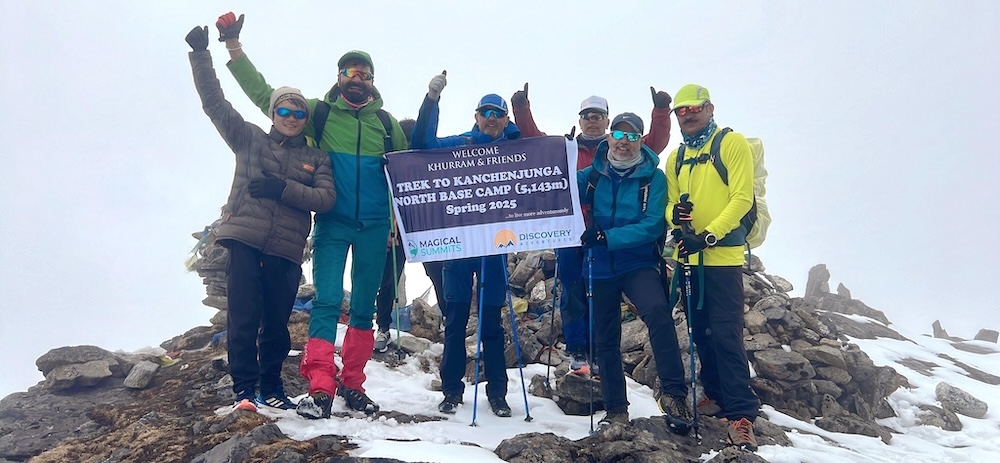
Beautiful memories KBC Trek!
I was part of a group of 5 who booked the Kanchenjunga North Base camp trek through Himalayan Discovery Adventures. I was very impressed by the level and speed of service which was extended from the time I started conversation with booking team till the time I ended the trek. The guide was superb, knowledgeable of the trek and was very courteous. The support team back in Kathmandu led by Mr. Chhiring Sherpa went out of their way to make the experience of this amazing trek even more memorable. Not only would I recommend Himalaya Discovery Adventures to others but I would look them up again for my future treks in Nepal.
Beautiful memories KBC Trek!
I was part of a group of 5 who booked the Kanchenjunga North Base camp trek through Himalayan Discovery Adventures. I was very impressed by the level and speed of service which was extended from the time I started conversation with booking team till the time I ended the trek. The guide was superb, knowledgeable of the trek and was very courteous. The support team back in Kathmandu led by Mr. Chhiring Sherpa went out of their way to make the experience of this amazing trek even more memorable. Not only would I recommend Himalaya Discovery Adventures to others but I would look them up again for my future treks in Nepal.
Incredible Solo Trekking Experience in Langtang and Gosaikunda with Himalaya Discovery!
Langtang and Gosaikunda lakes trek
This was my first trekking experience in Nepal, which I did as a solo traveller and it has been such a great experience. The Langtang and Gosaikunda lakes route offers many different landscapes, forest, rivers, villages, monasteries and the amazing view of Langtang Himalayas. Chhiring Sherpa provided an excellent trek organization. From the beginning he was extremely responsive, informative, and nice. During the trek, he has been always supportive and helpful whenever I needed. My guide, Nima Sherpa, was funny and kind throughout the trek, always checking on me to make sure that I was ok. I would highly recommend Himalaya Discovery Adventures!!

Incredible Solo Trekking Experience in Langtang and Gosaikunda with Himalaya Discovery!
Langtang and Gosaikunda lakes trek
This was my first trekking experience in Nepal, which I did as a solo traveller and it has been such a great experience. The Langtang and Gosaikunda lakes route offers many different landscapes, forest, rivers, villages, monasteries and the amazing view of Langtang Himalayas. Chhiring Sherpa provided an excellent trek organization. From the beginning he was extremely responsive, informative, and nice. During the trek, he has been always supportive and helpful whenever I needed. My guide, Nima Sherpa, was funny and kind throughout the trek, always checking on me to make sure that I was ok. I would highly recommend Himalaya Discovery Adventures!!
An Unforgettable Journey on the Indigenous People’s Trail – Perfect for Every Adventure!
Great trekking company
My 80 year old father and myself did the Indigenous People’s Trail with Himalaya Discovery. They were absolutely wonderful!!! All communications with Chhiring Sherpa when we were still in Aus were clear and accurate. He made the planning very easy. Once we got to Kathmandu our guide met us at the airport and made the rest of our trip a piece of cake. They shaped the walk around what we wanted, were able to tailor each day’s walk to what suited best at the time. Lots of time spent with locals, eating and drinking with them for their evening dinners. Great people to be walking with. I will definitely be coming back and using this company every time I come here.

An Unforgettable Journey on the Indigenous People’s Trail – Perfect for Every Adventure!
Great trekking company
My 80 year old father and myself did the Indigenous People’s Trail with Himalaya Discovery. They were absolutely wonderful!!! All communications with Chhiring Sherpa when we were still in Aus were clear and accurate. He made the planning very easy. Once we got to Kathmandu our guide met us at the airport and made the rest of our trip a piece of cake. They shaped the walk around what we wanted, were able to tailor each day’s walk to what suited best at the time. Lots of time spent with locals, eating and drinking with them for their evening dinners. Great people to be walking with. I will definitely be coming back and using this company every time I come here.
Une Aventure Inoubliable au Népal avec Himalaya Discovery – Authenticité et Bienveillance au Rendez-vous!
Deux copines venues de très loin pour fêter les 30 ans. Le défi de Thorong La était quelque chose d’assez incroyable et stressant pour nous. 2 filles. Mais, HIMALAYA DISCOVERY est selon moi l’entreprise la plus locale et sincère que l’on peut trouver au Népal. C’est l’entreprise qui vous donne la force de réussir ! ????️
Ils ont une dizaine de guide/porteurs maximum.
Norbu et Pemba étaient si bienveillants , calmes et au petit soin chaque jour. Nous avons passé 10 jours exceptionnels. Ils sont devenus notre deuxième famille et c’est une certitude que nous reviendrons au Népal avec eux.
Chaque détail était important pour eux. Notre bien être , leur priorité. La réservation des meilleures chambres dans les maisons de thé. Nos meilleurs repas pour l’acclimatation et bien dormir.
Nous rassurer quand nous étions un peu inquiète d’une étape de marche.
Une flexibilité hors norme, même sur place lorsque nous avons voulu modifier quelque chose.
Vraiment je ne peux pas recommander une meilleure agence que celle là.
Vous pouvez y aller les yeux fermés.
Ce sont les meilleurs.
Ce sont les plus sympathiques.
Mais surtout : les plus authentiques.
Merci encore à mes amis népalais.
À bientôt
Laura de Corsica.

Une Aventure Inoubliable au Népal avec Himalaya Discovery – Authenticité et Bienveillance au Rendez-vous!
Deux copines venues de très loin pour fêter les 30 ans. Le défi de Thorong La était quelque chose d’assez incroyable et stressant pour nous. 2 filles. Mais, HIMALAYA DISCOVERY est selon moi l’entreprise la plus locale et sincère que l’on peut trouver au Népal. C’est l’entreprise qui vous donne la force de réussir ! ????️
Ils ont une dizaine de guide/porteurs maximum.
Norbu et Pemba étaient si bienveillants , calmes et au petit soin chaque jour. Nous avons passé 10 jours exceptionnels. Ils sont devenus notre deuxième famille et c’est une certitude que nous reviendrons au Népal avec eux.
Chaque détail était important pour eux. Notre bien être , leur priorité. La réservation des meilleures chambres dans les maisons de thé. Nos meilleurs repas pour l’acclimatation et bien dormir.
Nous rassurer quand nous étions un peu inquiète d’une étape de marche.
Une flexibilité hors norme, même sur place lorsque nous avons voulu modifier quelque chose.
Vraiment je ne peux pas recommander une meilleure agence que celle là.
Vous pouvez y aller les yeux fermés.
Ce sont les meilleurs.
Ce sont les plus sympathiques.
Mais surtout : les plus authentiques.
Merci encore à mes amis népalais.
À bientôt
Laura de Corsica.
Recommended for you
View Details
Trekking in Nepal
Tamang Heritage Langtang Gosaikunda
View Details
Trekking in Nepal
Helambu Circuit Trek
View Details
from USD 900
USD 795
Trekking in Nepal
