Your awe-inspiring 2026 journey starts here! Fixed Departures: Upper Mustang – 5th Aug, Annapurna Circuit – 8th Aug, 11th Sept, Nar Phu Valley – 24th Oct, 13th Nov


Jiri to Everest Base Camp
Trip Info
Duration
19 Days
Trek Region
Everest
Destination
Nepal
Max. Altitude
5,644 m
Group Size
2 - 12
Grade
Moderate
Activity Per Day
4 to 6 hours
Meals
BLD
Breakfast, Lunch, Dinner
Best Season
February to May and September to November
Activity
Trekking in Nepal
Accomodation
Lodge
Nepal lodges, also known as teahouses, are basic yet cozy accommodations found along trekking routes.
Start/End Point
Bhandar /Lukla
Nature Of Trek
Teahouse to Teahouse Trekking
Jiri to Everest Base Camp Trek is a highly praised trekking route of the Everest region. It was in 1953 when two renown figures Sir Edmund Hillary and Mr. Tenzing Norgey Sherpa had taken the same route for the Mt. Everest expedition.
After a scenic drive of eight hours from Kathmandu to Jiri, our trek begins the following morning, passing through the lower parts of the Everest region, which are relatively undeveloped compared to the northern side of the Namche Bazaar district. This allows hikers to experience many traditional cultural and local aspects.
The trail runs through numerous villages of various ethnic groups including Tamang, Jirel, Rai and of course, the Sherpa. Walking along this trek involves many up and down hills with the trail being well maintained in most villages with tea houses and good campsites.
Being a combination of two treks that passed from Namche Bazaar, the Khumbu area’s main trading village continuing through Gokyo Valley, Chola Pass, Lobuche, Everest Base Camp and up to Kala-pattar then back down to Tengboche Monastery and back to Lukla. From Lukla, we also offer the popular Everest Base Camp Trek.
Why Choose EBC Trek By Road From Jiri?
Easy Start and Convenient Access
Starting the Everest Base Camp (EBC) trek from Jiri by road is a way of reaching the trailhead comfortably. The trip from Kathmandu to Jiri is a wonderful start with no need to board the Lukla flight.
Experience Beautiful Scenery
While on a road trip to Jiri, you will be able to see spectacular views of the country of Nepal. The rivers, hills, and local villages you see are just some of the things that make your adventure before walking the trek.
Gradual Acclimatization
The altitude of Jiri is lower than that of Lukla. One of the advantages of starting the trek from here is that your body gets used to the high altitude slowly, which in turn diminishes the chances of altitude sickness. You also get to acclimate more as you continue on your gradual ascent.
Less Crowded Trails
The Jiri route is less busy and not as packed with people as the one from Lukla, which is more popular. Therefore, you will not only have a peaceful walk but also will have the opportunity to experience nature and people who are not tainted by the tourist culture.
Authentic Local Experience
The road journey and trek from Jiri not only make you meet with friendly locals but also give you a chance to see real mountain life. Moreover, you are given the opportunity to discover the traditional villages and, at the same time, experience the culture more authentically.
Peaceful EBC Trekking Experience by Avoiding Crowds at Lukla
The Everest Base Camp trek by road completely bypasses all the traffic jams typically encountered at Lukla and the road/path sections below. By skipping the busy Lukla airfield, trekkers avoid the annoying waits, congestion, and crowded paths near peak seasons.
This option actually provides many hours of hiking with little to no other trekkers. Furthermore, this trek offers far more opportunities to enjoy the stunning natural beauty and local culture. Tekkers immerse themselves in their surroundings rather than shuffling to keep pace with the trekking group.
Fewer people, of course, make the trek safer and more comfortable, enhancing overall satisfaction. For those interested in fewer crowds or a less touristy hike, the Everest Base Camp trek by road is a fantastic option in 2025 and 2026.
Classical Jiri to Everest Trek 19 Days With Himalaya Discovery
Classical Jiri to Everest Trek 19 Days with Himalaya Discovery retraces a legendary trail to Mount Everest. It was overlooked by many of the very first trekkers. This trek follows a gradual ascending path through lush forests and hills. It passes through Sherpa villages before finally reaching the Everest Base Camp.
This trek yields excellent possibilities to immerse yourself in the local culture. Trekkers will benefit from our knowledgeable Sherpa guides who were born and raised in the Himalayas. Their incredible experience, vast mountain skills, and friendly hospitality ensure a successful and safe trek.
When you trek with Himalaya Discovery, you will be lead by government-certified, trained Sherpas. They will trek alongside you to keep you safe. They also allow you to enjoy the unbelievable beautiful experience of the Everest region.
Everest Base Camp Trek by Road 2025/2026
A jeep trip to Everest Base Camp from Jiri, which is the natural route to Mount Everest, will be really enjoyable. Here you will not take a flight to Lukla.
- From Jiri: You are set to take the Jiri Road to Bhandar. This trip on the narrow mountain roads will last about 6-10 hours. The distance is around 177-187 km. Bhandar is a place that is at the end of your way out of Jiri.
- Traditional trek: If you only pick the classic trek itinerary, the trek at Bhandar will be your first stop. The climb is very slow, and the path that goes through Sete, Junbesi, Nunthala, Bupsa, and then descending into Phakding is your route. After that, you get on with the common EBC pathway through Namche Bazaar, Tengboche, Dingboche, and further up.
Wise are those who do not board the Lukla plane, as it often gets delayed or cancelled most of the time due to the weather situation in Lukla. The trip by road to EBC is equally captivating as it presents you with vivid sceneries, culture, and acclimatization through the cultural landscape.
You will be following the tracks of the first climbers, like Hillary and Tenzing. You will be moving from Nepal's mid-hills, verdant forests, and cultural villages to the high-altitude regions. The trip culminates at your destination: Everest Base Camp and Kala Patthar.
Customizable Everest Base Camp Jeep Trek Itinerary
Himalaya Discovery's Customizable Classical Everest Base Camp Trek Itinerary offers flexibility and adaptability. We know trekking in the Himalayas can be unpredictable.
Every traveller has different needs, and we adjust the itinerary even while you're on the trek.
Our qualified Sherpa guides make changes on the fly, ensuring your comfort, safety, and enjoyment.
It's your adventure; if needed, you can shorten the return trek to Kathmandu. Trek with us at your pace, based on your preferences and circumstances.
Jiri to Everest Base Camp Trek Difficulty
Everest Base Camp trekking takes some serious effort. But to complete this journey, do you need to be in great shape? The simple answer is NO!. You can go at a slow speed, your own pace and still make it Jiri to Everest Base Camp Trek. Going slow is actually going to assist you acclimatize better.
You should be able to walk 8 to 12 km in a day. Be able to walk for at least an hour on intense inclines. Unless you plan to hire a porter, you can carry a bag while doing all of this.
When you’re ready, it’s hard to measure. It’s not like a Marathon or anything else you’ve most likely ever done. There were people on the trail who were overweight and going incredibly slow but to celebrate the achievement they were right there with us at the base camp.
We recommend doing some 4 to 6 hours treks at home so your body gets used to this kind of workout duration. Start about 5-7 weeks before you leave and build up time and distance slowly so that your body is comfortable with trekking for a solid 6 hours by the end of it.
Trek Highlights
- Visit Everest Base Camp and experience the camaraderie as climbers attempt the world’s highest peak
- Highly experienced Sherpa leaders
- Stand on the summit of Kala Patar at 5,645 m. (18,519 ft) for stunning views of Everest
- Visit ancient monasteries and receive a blessing from a monk/lama
Note
The above information is a guide and standard template of what we provide. This itinerary can be customized according to the duration of your holiday. We have many options for shorter visits based on your interests and budget.
On an adventure trek of this type, weather, political strikes, transport or a multitude of other factors beyond our control can result in a change of itinerary. It is however very unlikely that the itinerary would be substantially altered; if alterations are necessary the leader will decide what is the best alternative, taking into consideration the best interests of the whole group. Where a change does occur, we do everything we can to minimize its effect, but we cannot be responsible for the results of changes or delays.
Trek Leader and Crew
Here at Himalaya Discovery, we firmly believe that the way to get the most out of your staff is to treat them well; a happy staff is a hard-working staff. And this belief manifests itself in every way we deal with our staff.
We employ only local leaders and staff to help sustain the local communities we work with. We provide training for all our staff and all our trek leaders are trained in the following as a minimum;
- Intensive Wilderness First Aid
- Trekking Guide Training
- Eco Trekking Workshop & Adventure Meet
- English Language
- Conservation & Biodiversity
- Rock & Ice Climbing & Mountaineering (for expedition leaders)
So, we can guarantee you your trip will be led by the best, most professional and experienced guides there are. All of our guides good English-speakers, All our guides are carefully selected for their experience, leadership skills and personal ability. We have learnt that effective leadership is a vital for a trip to be safe, enjoyable and successful.
In fact, not only are all our guides experienced working in these regions, but most of them actually grew up in these mountainous regions of Nepal. Its home for them, it’s in their blood. They’re not only ‘familiar’ with local communities and culture; they’re a part of them and they practice it. They truly love their home and relish getting the opportunity to show travellers.
Itinerary
Our team of local trekking experts has developed this Jiri to Everest Base Camp Trek itinerary based on years of experience on the trail.
The Sherpa guides created the itinerary to provide a gradual ascent, adequate acclimatization, and most importantly, the time to explore the cultural and natural beauty around you in the Khumbu and Solu regions.
The Sherpa guides created the itinerary to provide a gradual ascent, adequate acclimatization, and most importantly, the time to explore the cultural and natural beauty around you in the Khumbu and Solu regions.
Day 01- Arrive in Kathmandu.
Today is arrival day in Kathmandu, Nepal’s capital city and the starting point for your Everest Base Camp trek.
A Himalaya Discovery representative will meet you at Tribhuvan International Airport and transfer you to your hotel.
You can spend the day unwinding and adjusting to the altitude. In the evening, you will have a briefing about your trek, permits, gear, itinerary, etc.
Distance : Airport to Hotel ~5–7 km
Duration : (20–30 minutes depending on traffic)
Altitude : 1400m
Meals : Breakfast
Accomodations : Hotel
Place : Swayambhunath Stupa, Boudhanath Stupa, Pashupatinath Temple, Kathmandu Durbar Square, Thamel, Garden of Dreams, Patan Durbar Square


Day 02- Kathmandu → Jiri → Bhandar (Drive)
The trip begins by driving from Kathmandu through the Ramechhap highway and up into the gentle hills of Nepal. It passes through Dolalghat, Lamosangu, Charikot, and onwards to Jiri.
From Jiri onwards, it is a rough road to Bhandar. The journey takes hours with an elevation of 2,190 meters. It is a long 8-9 hour drive. Along the way, you will be rewarded visually with terraced fields, valleys with river systems, and earthy populated forested slopes.
You will see homes and colourful prayer flags. Then comes the mountains and the first signs of the beginning of the trail. Once you arrive in Bhandar, check in at the teahouses. Here, the enjoyable evening begins with gazing at faraway peaks. It also includes planning for tomorrow, the first leg of your journey along the Jiri to Everest Base Camp trek.
Distance : 190 km
Duration : 8–9 hours by private vehicle or local bus
Altitude : 2190 m / 7185 ft (Bhandar)
Meals : Breakfast-Lunch-Dinner
Accomodations : Guesthouse/ Teahouse
Place : Jiri Bazaar, Tamakoshi River, Dolakha Bhimsen Temple, Shivalaya, Bhandar Village, surrounding terraced fields, traditional Sherpa settlements


Day 03- Bhandar – Kinja – Sete Village
You will begin your day with breakfast in Bhandar, and then start your trek to Kinja along a beautiful trail, through deep forest, up and down and over suspension bridges across streams, and finish with lunch at the Sete Village lodge.
The trail is steep, but it’s good climbing slowly along ridges and terraces, with trees, rhododendron and pine. You pass small farm houses and many walls of carved stone, chanting prayers.
The climb gives constant views of snow-capped peaks, while the distant in the far away builds more views. When you reach Sete Village (2,800 m), you can put your feet up at your teahouse and after dinner rest while the last sun glows at the surrounding hills.
The sentences mix short and long. Although your legs are tired, you feel happy because your trek is providing good views of the forest and mountains. Dinner at the lodge is simple and warming. You sleep prepared for tomorrow.
Distance : 12–14 km
Duration : 7–8 hours
Altitude : 2575 m / 8448 ft (Sete Village)
Meals : Breakfast-Lunch-Dinner
Accomodations : Guesthouse/ Teahouse
Place : Bhandar Village, Kinja Valley, Likhu Khola River, terraced farmlands, rhododendron forests, Sete Village (Sherpa settlement)


Day 04- Sete Village – Lamjura Pass – Junbesi
From Sete, the trek continues, with the next climb taking you up to Lamjura La Pass at 3530 m.
On this stretch of the hike, you’ll pass Dagchu, Goyam, and a few mani walls. The scenery is pleasant, and a simple teahouse is waiting to serve you lunch before the final approach to the pass.
The actual climb is certainly steep, but the views of Mount Numbur and the Gaurishankar range in the windswept cold with the prayer flags flapping will be the reward.
After passing the trek continues downhill through the rhododendron forests and many farming villages to Junbesi (2700 m) and arrives in the village of Junbesi, tired but just as happy as before.
Distance : 11–12 km
Duration : 6–7 hours
Altitude : 3530 m / 11,581 ft (Lamjura Pass)
Meals : Breakfast-Lunch-Dinner
Accomodations : Guesthouse/ Teahouse
Place : Sete Village, Lamjura Pass, rhododendron forests, Sherpa settlements, Junbesi Village, Thubten Choling


Day 05- Junbesi – Taksindu – Nunthala
You have your breakfast in Junbesi and are on your way to Phurtang, Sailung, and Ringmu, the three small villages, where you stop for a light lunch at Taksindu.
The path is lined with pine trees, and you go over wooden and suspension bridges.
From Taksindu, you can catch the views of Everest, Thamserku, and Mera Peak. The walk starts quite nice, but soon becomes quite rough, and you have to cross streams and walk on uneven stone paths.
By late afternoon, you are at Nunthala (2,330 m), where you go down slowly. The day’s walk is a combination of the serene valley and some glimpses of the local culture.
Distance : 16 km (approx.)
Duration : 6–7 hours
Altitude : 3071 m / 10,075 ft (Taksindu La Pass)
Meals : Breakfast-Lunch-Dinner
Accomodations : Guesthouse/ Teahouse
Place : Junbesi Village, Salung viewpoint (Everest first glimpse), Ringmo, Taksindu La Pass, Taksindu Monastery, Nunthala Village


Day 06- Nunthala – Kharikhola – Bupsain
Today, after breakfast in Nunthala, your trek will begin with a downhill trek toward the sound of the Dudh Koshi River. You cross a bridge close to Jubhing and have lunch along the river edge.
After lunch, you will make a steady uphill climb on the trails toward Kharikhola, passing terraced farms, mani stones, and shimmering prayer flags. After a break, you will continue uphill along forest trails to Bupsa (2360m).
The trail condition changes with the overview departing somewhat rugged and gradually changing to smoother paths. You will see rice terraces, forest areas, and peaks appearing in the distance through the trees.
You will arrive in Bupsa in the afternoon, which is a small Sherpa village.
Distance : 12–14 km
Duration : 6 hrs
Altitude : 2360 m / 7743 ft (Bupsa)
Meals : Breakfast-Lunch-Dinner
Accomodations : Guesthouse/ Teahouse
Place : Nunthala Village, Dudh Koshi River, Jubhing, Kharikhola Village, Kharikhola Monastery, Bupsa Village


Day 07- Bupsa – Paiya – Surke (2290 m / 7,513 ft, 6–7 hours)
You begin the day with breakfast in Bupsa and then hike along a muddy, slippery uphill trail through lush rhododendron and pine forest toward Tham Danda, arriving at Tham Danda in about 1.5-2 hours. When you arrive at Tham Danda, you will stop for tea in the greenery and crisp Himalayan air.
From here, you will take the path that leads to Paiya, a small village 2.5 hours ahead, where you will be able to stop for lunch at a simple teahouse, where hearty meals and a well-deserved rest will be appreciated.
After lunch, you will descend outwardly toward Surke. The trail will flatten out and open views of Mount Numbur and Lukla far away. You will arrive in Surke in about 2-2.5 hours. You will eat dinner and overnight at the comfortable teahouse lodge near a gompa and the mani walls.
Distance : 11–12 km
Duration : 5 hrs
Altitude : 2330 m / 7644 ft (Paiya / Chutok La area)
Meals : Breakfast-Lunch-Dinner
Accomodations : Guesthouse/ Teahouse
Place : Bupsa Village, Kari La Pass, Paiya (Chutok), Dudh Koshi Valley views, Surke Village (below Lukla)


Day 08- Surke – Ghat – Phakding (2618 m / 8,589 ft, 5–6 hours)
You will start the day with breakfast in Surke before you trek through rhododendron and pine trees. The trek takes you by Chaurikharka and Chheplung until you get to the end of your trek to Ghat, where you will have lunch in a small tea house next to the forest.
After lunch, the trek is level. The short trip from Ghat to Phakding and on to hike a part of the well-known Everest base camp trek is mostly flat and easy. You will pass stone mani, depending on the season, you might see the blooming rhododendron flowers, and you might catch a glimpse of the Dudh Koshi river as you travel along your trek.
You will arrive in Phakding in the early afternoon. Dinner and overnight accommodation will be in a guesthouse, with your simple hot meal being prepared by your Sherpa host. The river valley will have the soft and mellow hum of trekkers resting and drinking to keep you awake.
Distance : 10–11 km
Duration : 6 hrs
Altitude : 2618 m / 8589 ft (Phakding)
Meals : Breakfast-Lunch-Dinner
Accomodations : Guesthouse/ Teahouse
Place : Surke Village, Chheplung, Ghat Village, Dudh Koshi River, suspension bridges, Phakding Village (entry to Sagarmatha National Park region)


Day 09- Phakding – Jorsalle – Namche (3440 m / 11,319 ft, 6 hours)
After breakfast in Phakding, we will be walking along the banks of the Dudh Koshi River, through the pine forests. You’ll pass through little settlements and walk on a few suspension bridges.
Lunch will be at Jorsalle, after which you will go into the Sagarmatha National Park area. Jorsalle is an area gateway, with rushing river sounds and rustic teahouses.
After Jorsalle, the trail rises steeply; it ascends through forested sections, prayer flags, and mani walls. Finally, we arrive at Namche Bazaar – a busy Sherpa town. Dinner and overnight in a guesthouse (with colourful shops) and mountain view.
Distance : 12 km (approx.)
Duration : 5 hrs
Altitude : 3440 m / 11,319 ft (Namche Bazaar)
Meals : Breakfast-Lunch-Dinner
Accomodations : Guesthouse/ Teahouse
Place : Phakding Village, Jorsalle, suspension bridges over Dudh Koshi River, Sagarmatha National Park entrance, Namche Bazaar, Sherpa Museum, Namche Monastery


Day 10- Namche – Hotel Everest View – Namche (3440 m / 11,319 ft, 3–4 hours)
You will have a full breakfast in Namche before going uphill, to the trees and village and up to Hotel Everest View. The hotel is on a ridge above Namche. The track is of good quality and easy to follow.
It is worth getting lunch at the hotel. The Himalaya are spectacular, and the terrace has the best views of Everest, Ama Dablam, and the wonderful pinnacles and hills (all glittering in the clear light) from which they stand out.
After lunch, you will come back down towards Namche, the same way you came. You will have dinner and overnight in the lodge, with the song and warmth around you, and your thoughts of the mountains.
Distance : 6 km (round trip)
Duration : 6 hrs
Altitude : 3860 m / 12,664 ft (Hotel Everest View viewpoint)
Meals : Breakfast-Lunch-Dinner
Accomodations : Guesthouse/ Teahouse
Place : Namche Bazaar, Hotel Everest View, Everest Viewpoint, Sagarmatha National Park, Namche Monastery, Sherpa Cultural Museum


Day 11- Namche – Phunki Tenga – Tengboche (3860 m / 12,664 ft, 5–6 hours)
After breakfast in Namche, you start a ridge-traversing trail leading to Phunki Tenga above the Dudh Kosi.
The trail is beautiful and provides incredible views of Everest, Lhotse and Ama Dablam. You drop down into a small settlement on the river for lunch and find tea and cafés in front of rustic teahouses.
After lunch, it’s an uphill trail through rhododendron and pine forests to reach Tengboche and the famous monastery. The air is thinning, and the prayer flags are fluttering in the breezes up there.
Dinner and overnight will take place at the teahouses around Tengboche.
Distance : 10 km (approx.)
Duration : 5–6 hours
Altitude : 3860 m / 12,664 ft (Tengboche Monastery)
Meals : Breakfast-Lunch-Dinner
Accomodations : Guesthouse/ Teahouse
Place : Namche Bazaar, Phunki Tenga, Dudh Koshi River, Sagarmatha National Park, Tengboche Monastery, Ama Dablam viewpoint, Sherpa villages


Day 12- Tengboche – Somare – Dingboche (4410 m / 14,468 ft, 5 hours)
After enjoying breakfast at the teahouse in Tengboche, you will walk downhill with a wonderful and easy trail through beautiful rhododendron forest to Debuche, where you cross a suspension bridge over the Imja Khola.
You will climb uphill to traverse through Pangboche, fly past some prayer wheels and the oldest monastery near Everest. You may stop in Somare for lunch and see Ama Dablam soaring above you.
You finally arrive in Dingboche, where you will enjoy dinner and an overnight stay at a teahouse. Surrounded by alpine fields, high peaks, and resting, the temperatures at this altitude provide you with ease of reflection for a quiet moment.
Distance : 10 km (approx.)
Duration : 5 hrs
Altitude : 4410 m / 14,468 ft (Dingboche)
Meals : Breakfast-Lunch-Dinner
Accomodations : Guesthouse/ Teahouse
Place : Tengboche Monastery, Somare Village, Imja Khola Valley, Ama Dablam viewpoint, Dingboche Village, terraced fields, Mani walls


Day 13- Dingboche – Thukla – Lobuche (4940 m / 16,207 ft, 6–7 hours)
Leaving Dingboche (4,410 m), you will start climbing through yak pastures and alpine meadows with Ama Dablam looming ahead.
After about 2 – 3 hours, you will arrive at Dughla (Thukla village, ~4,620 m), which is a good place to stop before climbing steeply up to Thukla Pass at the Everest Memorial.
The open climb is steep, with switchbacks and thinning air, but worth the climb for the moving memorials and the views of the Khumbu Glacier.
After passing the trail levels out alongside the glacier moraine and then gently climbs into Lobuche (~4,940 m), where you will find rustic lodges and views of Pumori, Nuptse and Lobuche East.
Distance : 12 km (approx.)
Duration : 5–6 hours
Altitude : 4940 m / 16,207 ft (Lobuche)
Meals : Breakfast-Lunch-Dinner
Accomodations : Guesthouse/ Teahouse
Place : Dingboche Village, Thukla Pass, Khumbu Glacier, memorials for climbers, Lobuche Village, Everest views, Ama Dablam viewpoints


Day 14- Lobuche – EBC – Gorakshep (5140 m / 16,863 ft, 9 hours)
After breakfast in Lobuche, you take the moraine trail along the Khumbu Glacier to reach Gorakshep. The path steadily climbs, with some rocky sections to navigate.
Then you continue to Everest Base Camp, tramping over some extremely rough glacial terrain. You get a chance for photos and contemplation among the dozens of tents and ice mounds at the camp. You also finish a part of your journey and go back to Gorakshep for lunch.
You will dine and stay for the night in Gorakshep, the highest place of residence – isolated, cold and something very special, a base destination for real Everest climbers.
Distance : 15 km
Duration : 8–9 hours
Altitude : 5364 m / 17,598 ft (Everest Base Camp)
Meals : Breakfast-Lunch-Dinner
Accomodations : Guesthouse/ Teahouse
Place : Lobuche Village, Khumbu Glacier, Everest Base Camp, Gorakshep Village, Kala Patthar viewpoint, memorials for climbers, Ama Dablam and Lhotse views


Day 15- Gorakshep – Kala Patthar – Pheriche (4240 m / 13,911 ft, 8 hours)
You will find yourself starting before dawn again in Gorakshep, to trek to the summit of Kala Patthar to take in mind-blowing views of Everest and surrounding peaks. The trail is rocky, steep, and quite exhilarating.
Once you return from the Kala Patthar, you will walk back down to Gorakshep for breakfast, then proceed down to down through past glaciers and ridges where you will begin to gain speed dropping into lower valleys.
By the evening, you will have arrived at Pheriche. You will have dinner and spend the night in a teahouse located in a quiet valley. You will rest in the alpine stillness and undertake your final acclimatization.
Distance : 14 km
Duration : 7.30 hrs
Altitude : 5555 m / 18,232 ft (Kala Patthar viewpoint)
Meals : Breakfast-Lunch-Dinner
Accomodations : Guesthouse/ Teahouse
Place : Gorakshep Village, Kala Patthar viewpoint, Khumbu Glacier, Everest views, Lobuche Peak, Ama Dablam, Pheriche Village, Sagarmatha National Park


Day 16- Pheriche – Tengboche – Namche (3440 m / 11,319 ft, 6–7 hours)
You will have breakfast in Pheriche, and then head south down the slopes and into the river valleys. You will arrive in Tengboche just in time for lunch at the grounds of the soaring walls of the monastery.
After lunch, the trail will dive down through a bit of forest and across several bridges, then begin a gentle climb up toward Namche. Along the way, you will pass some familiar villages and feel the valley change.
In Namche, you will have dinner and stay in a lodge to stay in overnight; both options will provide comfort, a buzz, and a nice opportunity to relax in Sherpa tea houses.
Distance : 13 km (approx.)
Duration : 6.50 hrs
Altitude : 3860 m / 12,664 ft (Tengboche Monastery)
Meals : Breakfast-Lunch-Dinner
Accomodations : Guesthouse/ Teahouse
Place : Pheriche Village, Tengboche Monastery, Khumbu Glacier views, Ama Dablam and Lhotse viewpoints, Namche Bazaar, Sagarmatha National Park


Day 17- Namche – Phakding – Lukla (2840 m / 9,318 ft, 6–7 hours)
After breakfast in Namche, you will be ready to begin the trek out. The initial path will descend along the forested ridges and the bridges. You will stop at Phakding for lunch, get a river view, and see some of the older teahouses around Phakding.
After lunch, you will pass through some villages and a rhododendron forest, while climbing a gentle descent toward Lukla.
Arriving in Lukla in the late afternoon, you will have dinner and lodge for the night. The overall energy felt different, warmer, celebratory, while also welcoming, and most importantly, given that it would soon be the end of this wonderful adventure.
Distance : 20 km
Duration : 6–7 hours
Altitude : 3440 m / 11,319 ft (Namche Bazaar)
Meals : Breakfast-Lunch-Dinner
Accomodations : Guesthouse/ Teahouse
Place : Namche Bazaar, Phakding Village, Dudh Koshi River, suspension bridges, Sagarmatha National Park, Lukla Village, Tenzing-Hillary Airport


Day 18- Lukla - Kathmandu (Fly)
Today, you enjoy breakfast in Lukla before boarding a flight back to Kathmandu through some of the most scenic mountains in the world (also known for being the most dangerous flights as well).
The runway in Lukla never fails to engender nervousness in passengers as it is short and has a strong gradient—many of the pilots will have spent long hours flying in very difficult conditions, at nearly 9,500 ft elevation.
Your flight will take about 30 minutes, and you will depart Lukla with an amazing view of the Himalayas, before descending into the Kathmandu Valley, having watched the Himalayas slowly slide away behind you.
You will reach Kathmandu and enjoy a dinner in the city.
Distance : 138 km (Lukla → Kathmandu)
Altitude : 2835 m / 9,301 ft
Flight Hours : 30 minutes
Meals : Breakfast
Accomodations : Hotel
Place : Kathmandu Durbar Square, Swayambhunath (Monkey Temple), Pashupatinath Temple, Boudhanath Stupa, Thamel, Patan Durbar Square, Bhaktapur Durbar Square


Day 19- Return Flight Home
You enjoy your breakfast in Kathmandu and then either have the day free to explore temples before your flight, or free time to shop in Thamel.
Next, you head to the airport, through a bustling and lively city filled with vivid sights and sounds.
Through the next few hours, you are on your way home with you, memories of rugged mountain trails, high peaks and an expedition that will forever change you.
Altitude : 1400 m
Meals : Breakfast
Place : Thamel, Kathmandu Durbar Square, Swayambhunath (Monkey Temple), Pashupatinath Temple, Boudhanath Stupa, Patan Durbar Square


Not Satisfied with the Itinerary? We can customize a personalized itinerary to suit your preferences and requirements, ensuring your trip is exactly how you envision it.
Price Includes
- Airport transfers pick-up and drop-off
- Three meals a day (breakfast, lunch, dinner) during the trek.
- All accommodation during the trek.
- All necessary paper works, Everest National park entry permit.
- Trekking information management system (TIMS) permit.
- Airfare both ways to and from Kathmandu.
- From Kathmandu to Jiri/Deurali transport by bus.
- English speaking Sherpa trek guide
- The required number of staff and Porters to carry your luggage during the trek. (1 porter for 2 trekkers)
- Accommodation / salary / food / drinks / insurance / equipment / medicine and transport for all staff.
- Medical supplies (first aid kit will be available).
- Himalaya Discovery Duffel Bag and a t-shirt.
- Walking stick (if it is required).
- All government taxes.
- Farewell dinner with culture show.
Price Excludes
- International airfare and Nepal entry visa.
- Tips for the guide/porter (Tips is expected)
- Travel insurance which covers emergency Rescue and Evacuation.
- Any others expenses which are not mentioned on the ‘Price Includes’ section.
Add Ons Options
Trip Add Ons
You can absolutely level up your Jiri to Everest Base Camp Trek by adding extra activities that help you have a greater experience, specifically in Nepal, in the areas of culture, landscapes and adventure.
You can add:
- Trishuli River Rafting
- Heli Sightseeing
- Kathmandu Food Tour
- Paragliding in Nepal (Pokhara)
- Ultra-Light Flight
- Kathmandu Day Tour
- Bardia Jungle Safari
- Chitwan Jungle Safari
- Bungee Jumping
Sleeping Bag Rental
You can rent a 4-season sleeping bag for $30. If you lose it, damage it, the replacement bag fee is $165. If you return the bag in good condition, you will not owe the $165 or any money beyond the rental fee.
Personal Porters
We can assist in arranging personal porters if you are interested in using porters for your trek from Jiri to Everest Base Camp.
Personal porters cost a very reasonable $20 per day for each porter, for up to 25 kg of gear per two trekkers. The cost also includes meals, accommodation and insurance for the porters.
Luxury Accommodation Upgrade
Additional premium accommodation upgrades will be available pre-trek, during the hike in the Everest region or after the trek, based on your budget for your comfort.
Jiri to Everest Base Camp Trip Information
We will be with you the entire way. We will help you obtain your permits, prepare your gear, provide travel tips, etc.
Our experts will be available to address your questions on trail conditions, acclimatization procedures, or safety so you can trek from Jiri to Everest Base Camp without a worry.
Our experts will be available to address your questions on trail conditions, acclimatization procedures, or safety so you can trek from Jiri to Everest Base Camp without a worry.
Do's and Dont's During the Jiri to Everest Base Camp Trek
Do’s
-
- Adapt best trekking season: Trekking is best done in spring (March to June) or autumn (September to November) to avoid rain or snow, leading to the best weather projections and trekking variables. Trekking in the spring or fall means you will experience minimal rain, minimal snow, with the best foot trails.
- Accustom your body properly: Schedule a few rest days in Namche Bazaar, Dingboche or Pheriche, while also incorporating a few short/trips with high-low high treks so your body can acclimatize properly.
- Hire a qualified guide, and be well prepared: Be sure to wear good hiking boots, dress in layers which include warm clothing, and pack smartly. Your guide should be experience and able to keep you safe, but also keep you informed!
- Treat altitude sickness seriously: Your treatment for altitude sickness is most commonly rest, descent or medication (Diamox), with early treatment best. Move slowly, stay together as a group, and most important, hydrate.
- Have appropriate travel insurance: Make sure your travel insurance policy covers high altitude trekking, and also should evacuation be required as evacuations are often costly.
Dont’s
- Do not ignore early symptoms of altitude sickness: if you develop increased severity of headaches, nausea or breathlessness, stop or descend immediately.
- Do not assume flights are always dependable: Flights to Lukla are frequently delayed or cancelled due to weather, so have a road contingency via Jiri/Salleri.
- Use acclimatization days: Not using acclimatization days increases the chance of serious altitude illness.
- Do not rely on last-minute cash or credit: ATM’s are limited and inconsistent along the route, so take enough cash from Kathmandu to last the trek.
Everest Base Camp Jeep Trek Altitude and Distance
The Everest Base Camp (EBC) Jeep Trek begins with your overland drive (over 1,400 m) from Kathmandu to Thamdanda (will this be about 2,300-2,370m), which is approximately (330 – 360km), and from Thamdanda, we will trek-overland to Phakding (2,610 m), Namche Bazar (3,440 m), Tengboche (3,860 m), Dingboche (4,410 m), Lobuche (4,910 m) and to Everest Base Camp at 5,364.
So the entire overland drive will be up to just over 400-420 km (over and back EBC).
This itinerary permits a gradual increase in altitude, which will allow a good acclimatization strategy without the flight in-and-out of Lukla that can be somewhat unpredictable.
Altitude Sickness
- At elevations above about 8,000 feet, you will be entering a new climate (thin air) and, at this elevation (or higher), proper acclimatising and/or fast hiking will risk Acute Mountain Sickness, which could include headache, nausea, dizziness and exhaustion.
- At an elevation greater than about 9,000 feet, you run a much greater risk of serious complications of altitude (HAPE is fluid in the lungs, and HACE is swelling of the brain).
- You can help reduce your risk of altitude issues by taking your time for ascents, including rest days (ie, Namche or Dingboche), staying hydrated, and not drinking alcohol.
- Talk to your doctor about carrying and using Diamox (acetazolamide) if you are recommended to do so (and follow their medical guidance).
Everest Base Camp Trek by Road – Permits
While travelling the Jiri (Road Start) route, you will need to purchase three mandatory permits:
- Sagarmatha National Park Entry Permit (approximately NR3000 for foreigners).
- Khumbu Pasang Lhamu Rural Municipality Permit (approximately NR2000)–required to access the Khumbu region.
- Gaurishankar Conservation Area Permit–needed if you are using the Jiri route (approximately NR3000 for foreign travellers).
Where to Buy them: A Sagarmatha permit can be purchased in Kathmandu or Monjo; a Khumbu permit can be purchased at Monjo (as Jiri is outside of the Khumbu), and a Gaurishankar permit can be purchased in Kathmandu or at the Shivalaya checkpoint in China.
Make sure to bring copies of your passport, passport-size photos, and payment in Nepali Rupees–some offices will not take a card.
FAQs For Jiri to Everest Base Camp
Have a question about the Jiri to Everest Base Camp trek? We have answered the most frequently asked questions about the trek and trail conditions, physical fitness, safety, altitude sickness, etc.
If there are questions we have not answered that you have, please just ask; we are happy to help.
If there are questions we have not answered that you have, please just ask; we are happy to help.
Jiri to Everest Base Camp Trek FAQS
What is the best time to trek?
What is the starting point of the Jiri to Everest Base Camp Trek?
Is drinking water safe on the Everest trekking trail?
What gear do I need?
Do I need a guide or porter For Everest Base Camp Jeep Trek from Jiri?
Join our Fixed Departure Group Trips
Our fixed group tours are thoughtfully scheduled and offer specific departure dates, providing a fantastic opportunity for both solo traveler and groups to come together. Join other guests on a memorable journey and share in the adventure of a lifetime!
Ready to create your perfect adventure? Use our trip planner to customize your itinerary and schedule according to your preferences. We’re here to help you tailor every detail to fit your unique needs.
Accommodation
The accommodation for the Jiri to Everest Base Camp Trek will be in traditional teahouses. They are simple and convenient.
Usually, the rooms will have single beds, with blankets and pillows. The bathrooms will be shared. They may have electricity, hot showers and wi-fi at a charge.
You will notice that all of the facilities improve with altitude; however, these are remote towns with very basic facilities. You will likely share a room, or a garage-like room, in Gorakshep.
Meals
You can expect the meals on the Jiri to Everest Base Camp trek to be traditional Nepali foods. The beginning of the trek will begin with Dal Bhat. Dal Bhat is a delicious lentil soup in a bowl and eaten with rice. It is hearty and keeps the traveller energised and fuelled to start the trek.
Typical meal options include Tibetan bread, Shirpa stew (Syakpa), momo (dumplings), and noodle dishes such as Thukpa and Chow Mein.
For example, some teahouses will offer Western meals such as pasta and pancakes for breakfast. However, due to the medical situation, vegetarian foods should be consumed, particularly on the trails, and especially at higher altitudes during the trek.
Last Minute Bookings
Himalaya Discovery accepts late bookings so that you can have your dream trek planned on short notice.
Our sherpa team organises your guide, permits, teahouses and all other logistics, and they will also adapt your itinerary while keeping quality, comfort and value foremost.
Travel Insurance
Purchase travel insurance for Everest Base Camp. Most policies exclude altitude illness above 3000m, so check the small print. Check that it covers helicopter emergencies and even part of altitude sickness.
Comprehensive plans may also cover trip cancellation insurance, lost luggage, and medical expenses.
Travel Tips
- Electricity & Charging: Power is limited while we’re on the trail – packing a good power bank is a must.
- Internet: You will have access to the Everest Link solar-powered Wi-Fi system. You can buy a 10 GB subscription card for $30, which will keep you connected between Lukla and Base Camp.
- ATMs & Cash: There are limited ATMs after Namche. Bring sufficient Nepali Rupees with you from Kathmandu (cash is king).
- Tipping: Plan to bring around cash to tip your guides and porters.
- Personal Expenses: Budget another $150 – $250 for snacks, wi-fi access, charging your devices, getting bottled water, and showers.
Jiri to Everest Base Camp Trek Altitude Chart
Altitude in:
Everest Base Camp Region Temperature Chart


Beautiful memories KBC Trek!
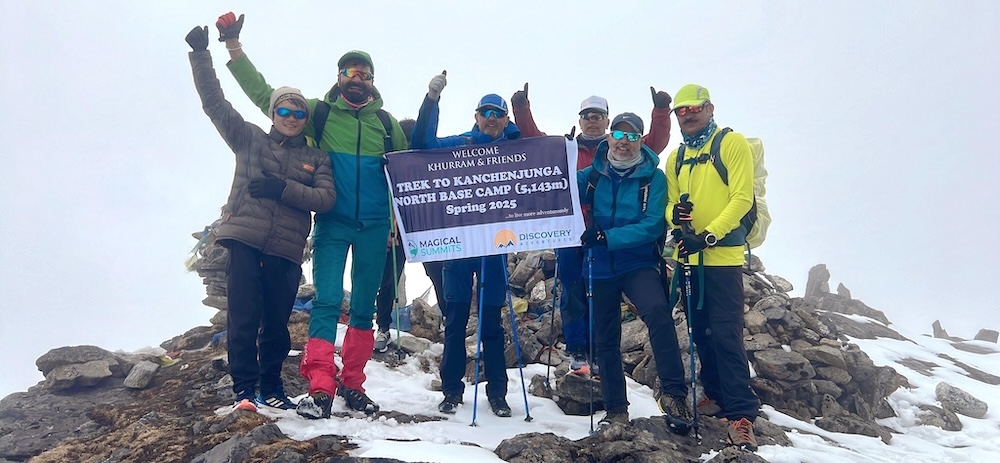
I was part of a group of 5 who booked the Kanchenjunga North Base camp trek through Himalayan Discovery Adventures. I was very impressed by the level and speed of service which was extended from the time I started conversation with booking team till the time I ended the trek. The guide was superb, knowledgeable of the trek and was very courteous. The support team back in Kathmandu led by Mr. Chhiring Sherpa went out of their way to make the experience of this amazing trek even more memorable. Not only would I recommend Himalaya Discovery Adventures to others but I would look them up again for my future treks in Nepal.
Beautiful memories KBC Trek!
I was part of a group of 5 who booked the Kanchenjunga North Base camp trek through Himalayan Discovery Adventures. I was very impressed by the level and speed of service which was extended from the time I started conversation with booking team till the time I ended the trek. The guide was superb, knowledgeable of the trek and was very courteous. The support team back in Kathmandu led by Mr. Chhiring Sherpa went out of their way to make the experience of this amazing trek even more memorable. Not only would I recommend Himalaya Discovery Adventures to others but I would look them up again for my future treks in Nepal.
An Unforgettable Journey on the Indigenous People’s Trail – Perfect for Every Adventure!
Great trekking company
My 80 year old father and myself did the Indigenous People’s Trail with Himalaya Discovery. They were absolutely wonderful!!! All communications with Chhiring Sherpa when we were still in Aus were clear and accurate. He made the planning very easy. Once we got to Kathmandu our guide met us at the airport and made the rest of our trip a piece of cake. They shaped the walk around what we wanted, were able to tailor each day’s walk to what suited best at the time. Lots of time spent with locals, eating and drinking with them for their evening dinners. Great people to be walking with. I will definitely be coming back and using this company every time I come here.

An Unforgettable Journey on the Indigenous People’s Trail – Perfect for Every Adventure!
Great trekking company
My 80 year old father and myself did the Indigenous People’s Trail with Himalaya Discovery. They were absolutely wonderful!!! All communications with Chhiring Sherpa when we were still in Aus were clear and accurate. He made the planning very easy. Once we got to Kathmandu our guide met us at the airport and made the rest of our trip a piece of cake. They shaped the walk around what we wanted, were able to tailor each day’s walk to what suited best at the time. Lots of time spent with locals, eating and drinking with them for their evening dinners. Great people to be walking with. I will definitely be coming back and using this company every time I come here.
Une Aventure Inoubliable au Népal avec Himalaya Discovery – Authenticité et Bienveillance au Rendez-vous!
Deux copines venues de très loin pour fêter les 30 ans. Le défi de Thorong La était quelque chose d’assez incroyable et stressant pour nous. 2 filles. Mais, HIMALAYA DISCOVERY est selon moi l’entreprise la plus locale et sincère que l’on peut trouver au Népal. C’est l’entreprise qui vous donne la force de réussir ! ????️
Ils ont une dizaine de guide/porteurs maximum.
Norbu et Pemba étaient si bienveillants , calmes et au petit soin chaque jour. Nous avons passé 10 jours exceptionnels. Ils sont devenus notre deuxième famille et c’est une certitude que nous reviendrons au Népal avec eux.
Chaque détail était important pour eux. Notre bien être , leur priorité. La réservation des meilleures chambres dans les maisons de thé. Nos meilleurs repas pour l’acclimatation et bien dormir.
Nous rassurer quand nous étions un peu inquiète d’une étape de marche.
Une flexibilité hors norme, même sur place lorsque nous avons voulu modifier quelque chose.
Vraiment je ne peux pas recommander une meilleure agence que celle là.
Vous pouvez y aller les yeux fermés.
Ce sont les meilleurs.
Ce sont les plus sympathiques.
Mais surtout : les plus authentiques.
Merci encore à mes amis népalais.
À bientôt
Laura de Corsica.

Une Aventure Inoubliable au Népal avec Himalaya Discovery – Authenticité et Bienveillance au Rendez-vous!
Deux copines venues de très loin pour fêter les 30 ans. Le défi de Thorong La était quelque chose d’assez incroyable et stressant pour nous. 2 filles. Mais, HIMALAYA DISCOVERY est selon moi l’entreprise la plus locale et sincère que l’on peut trouver au Népal. C’est l’entreprise qui vous donne la force de réussir ! ????️
Ils ont une dizaine de guide/porteurs maximum.
Norbu et Pemba étaient si bienveillants , calmes et au petit soin chaque jour. Nous avons passé 10 jours exceptionnels. Ils sont devenus notre deuxième famille et c’est une certitude que nous reviendrons au Népal avec eux.
Chaque détail était important pour eux. Notre bien être , leur priorité. La réservation des meilleures chambres dans les maisons de thé. Nos meilleurs repas pour l’acclimatation et bien dormir.
Nous rassurer quand nous étions un peu inquiète d’une étape de marche.
Une flexibilité hors norme, même sur place lorsque nous avons voulu modifier quelque chose.
Vraiment je ne peux pas recommander une meilleure agence que celle là.
Vous pouvez y aller les yeux fermés.
Ce sont les meilleurs.
Ce sont les plus sympathiques.
Mais surtout : les plus authentiques.
Merci encore à mes amis népalais.
À bientôt
Laura de Corsica.
Recommended for you
View Details
from USD 5,450
USD 4890
7-Day Luxury Everest Base Camp Trek
View Details
Climbing and Expedition
Ama Dablam Expedition
View Details
Climbing and Expedition
