Experience the Real Himalayas, Guided by Native Local Hearts.


What Is the Fastest Way to Acclimate to High Altitudes on a Trek in Nepal?
The fastest way to acclimatise whilst trekking in Nepal is to increase your altitude gradually, sleeping at a certain height, taking breaks for acclimatisation and giving your body time to adjust to the lower oxygen levels. Once you get to an altitude of 3,000m+, you should be sleeping at a height of 300-500m gain every day. For every 1,000m gained, you should spend another night.
You can do short hikes to higher altitudes and then sleep lower. Some trekkers may be prescribed a medication called Acetazolamide (Diamox) by their doctor if they need to increase their altitude quickly, as this is proven to speed up certain aspects of acclimation.
Some popular places to acclimatise on trekking routes in Nepal are: Namche Bazaar (3,440m), Dingboche (4,410m), Manang (~3,550m) and Samagaun (~3,530m).
However, you won’t be able to acclimatise straight away. All trekkers will require some time to acclimatise, no matter what medication, breathing exercises or fitness level you have.
Quick Facts About High-Altitude Acclimatization in Nepal
| Acclimatization factor | Recommended practice |
| Altitude sickness can begin | Around 2,500 m (8,202 ft), sometimes lower |
| Important acclimatization threshold | 3,000 m (9,843 ft) |
| Recommended daily sleeping-altitude gain | Approximately 300–500 m above 3,000 m |
| Additional acclimatization nights | About one for every 1,000 m gained |
| First 48 hours at high altitude | Avoid excessive exertion and alcohol |
| Time needed for initial adaptation | Several days, varying by individual |
| Effective acclimatization medication | Acetazolamide, when medically appropriate |
| Most important altitude measurement | Elevation where you sleep |
| Common warning symptoms | Headache, nausea, dizziness, unusual fatigue |
| Emergency warning signs | Confusion, loss of coordination, breathlessness at rest |
| Safest response to worsening illness | Prompt descent and medical assistance |
| Important Nepal trekking locations | Namche, Dingboche, Manang, Samagaun |
How Does Your Body Acclimatize to High Altitude?
Altitude acclimatization is the process of your body getting used to lower levels of Oxygen.
Whilst the level of Oxygen at Everest Base Camp is the same as Kathmandu (Around 21% of the atmosphere), the pressure of oxygen is much lower. This means that less oxygen will transfer into your lungs due to the increased altitude.
The body reacts to this straight away; however, different adaptations will occur.
The First 24 Hours: Breathing and Heart Rate Increase
Within a short period of getting to the high-altitude village, you might start to feel like you need to put more effort into climbing the stairs.
You will begin to breathe faster and deeper. In some cases, your heart rate will also increase even though you are moving slowly. This is your body trying to compensate for the lack of oxygen.
However, by increasing your breathing rate, you will lose more carbon dioxide. This affects the acid/base balance in your blood and limits how fast you can increase your breathing rate.
Some hikers will suffer from sleep problems, decreased appetite and headaches during the first day. Some may not experience any changes.
Feeling comfortable within a short space of time does not guarantee you will adapt. Acute mountain sickness can occur after a couple of hours in the new environment and particularly after the first night.
Days Two to Three: Your Kidneys Help Regulate Breathing
Within the next few days, your body starts expelling more of the bicarbonates in the form of urine.
It balances out the chemical alterations that occur due to excess respiration rate. This way, you are able to maintain higher levels of ventilation and oxygenation.
This is one of the reasons why another night at Namche Bazaar/Manang will make a huge difference.
The trekker can feel breathless in the first evening, tired in the morning of the second day, and feel much better on the third day.
But improvement is not always a certainty. Persistent or aggravated symptoms may be a sign of altitude sickness.
Days Four to Seven: Exercise Becomes More Manageable
Further exposure will also lead to continued adaptation. There are people who will realize that some activities, like walking up a hill to get to a viewpoint, will be relatively easy compared to when they first got there.
Quality of sleep can also be improved, but periodic breathing and awakening will persist at high altitudes.
The significant difference here is that acclimatization will not bring about normal sea-level performance.
Someone who could easily walk for 20 kilometers at lower levels would still have problems walking short distances going uphill around Lobuche (4,910 m).
Beyond One Week: Longer-Term Physiological Changes
Further adaptations occur with continued exposure, including those related to red blood cell production.
The amount of erythropoietin, which is responsible for stimulating red blood cell production, increases in the kidneys. Increases in the number of red blood cells will take longer than a few days.
It can be noted that this is the reason why climbing trips to the Himalayas take much longer to adapt to than typical teahouse trekking groups.
The time spent on a 12-day Everest Base Camp trekking trip and a multi-week 6,000- 8,000-meter expedition differs.
What Is the Fastest Scientifically Supported Method of Acclimatization?
There are many methods of improving high-altitude adaptation, but not all methods are effective to the same degree.
There is much proof in favor of gradual acclimatization, controlled sleeping altitude, and correct application of acetazolamide where required.
One must understand the difference between facilitating physiological processes and making a whole high-altitude route safe.
The drug acetazolamide can facilitate some vital respiratory adaptations. It does not immediately create all the physiological adaptations of acclimatization.
1. Control Your Sleeping Altitude
Your overnight altitude is probably one of the key things that must be considered in an acclimatization program.
For instance, walking from a lodge at an altitude of 3,400 meters to an observation point at 3,900 meters and then coming back to a lodge at 3,400 meters constitutes a different exposure to altitude compared to sleeping at 3,900 meters.
Exposure to higher altitude during the day is much less stressful than staying overnight at higher altitudes.
Nighttime breathing pattern changes.
High altitude may result in irregular breathing, hypoxemia and increased frequency of waking up.
Wilderness Medical Society suggests that altitude gains per day should not exceed 500 meters beyond 3,000 meters, including nights spent at the same elevation.
2. Use Staged Acclimatization Before the Trek
Those trekkers who have the flexibility to plan their travel can stay at moderate altitudes before going into the valleys of the high Himalayas.
The CDC recognizes that staying above 2,750 meters for at least two nights in the 14 days before embarking on a trip can possibly be helpful in acclimatizing. This concept would be applicable if a trekker is traveling from a country of low altitudes and going for an Everest trek immediately.
However, staying in Kathmandu at an approximate altitude of 1,400 meters cannot serve the purpose of high-altitude acclimatization. Spending time in Kathmandu can help in overcoming jet lag and other factors.
3. Consider Acetazolamide When Medically Appropriate
Acetazolamide is among the few drugs known to hasten an integral part of the acclimatization process. This drug helps the body to breathe better through regulation of the acid-base balance of the blood.
As per the CDC, acetazolamide helps the body undergo the process of ventilatory acclimatization, which normally takes around three to five days, in one day. However, this does not mean that a trekker gets acclimatized within 24 hours. The drug only reduces the chances of contracting acute mountain sickness.
4. Keep Initial Physical Effort Light
The harder one works out right after getting to altitude, the greater the oxygen needs of the body.
Let us take two trekkers who have come to Namche Bazaar after a difficult ascent from the valley of Dudh Koshi.
The first one spends the rest of the day relaxing, having some food and going for an easy walk around the village. The second one goes up a steep hill at full power in order to train.
The second one does not really have any advantage. Exerting oneself heavily can make the early hours at altitude more difficult and symptom recognition problematic.
The right thing would be to move at a steady walking pace, especially on the first two days at an elevated altitude.
5. Build Flexibility Into the Itinerary
Notably, an early departure does not mean a fixed obligation to climb despite any signs of illness.
In case of altitude sickness in Dingboche, the right course of action would be to spend another night at the same elevation or to descend, depending on the patient’s state.
A guide needs the ability to change the daily schedule.
It becomes critical when planning Everest, Manaslu, and Annapurna Circuit expeditions that have fewer nights on the itinerary, and thereby a larger altitude gain.
The shortest trip is not always the most successful one.
It is rather the shortest itinerary that offers sufficient time for acclimatization and proper treatment of illnesses.
How Much Altitude Should You Gain Per Day While Trekking in Nepal?
The advised rate is mostly dependent on the altitude at which you will be sleeping, not on the entire distance covered.
A day of trekking that covers 15 kilometers of comparatively flat landscape might end up resulting in minimal gain in altitude for the sleeping altitude. The other day, covering just 5 kilometers could end up 700 meters above where you slept last night.
The following table provides a general planning framework.
| Current sleeping altitude | Acclimatization considerations |
| Below 2,500 m | Most healthy visitors have a comparatively low risk, although susceptibility varies |
| 2,500–3,000 m | Begin monitoring symptoms carefully, particularly after rapid arrival |
| 3,000–3,500 m | Aim for approximately 300–500 m of sleeping-altitude gain daily |
| 3,500–4,000 m | Maintain conservative ascent and schedule additional nights |
| 4,000–4,500 m | Assess appetite, headache, coordination, sleep, and breathing daily |
| 4,500–5,000 m | Expect reduced physical performance and limited margin for rushed ascent |
| Above 5,000 m | Avoid unnecessary overnight exposure and follow an appropriately staged itinerary |
These bands are not separate medical rules. The same ascent principles apply across several of them, while the consequences of poor acclimatization become more serious as elevation increases.
Why Elevation Gain Matters More Than Trekking Distance
The trail between Namche Bazaar and Tengboche consists of descents and ascents. One can have quite a lot of ascents during one day but still be only marginally above where one slept the night before.
The same applies to the trail between Namche and Dingboche. The reason for this is that distance tables must give the altitude of the beginning and end of the walk.
Distance/walking time shows physical strain. Altitude gain from the sleeping altitude indicates acclimatization danger. They complement each other; neither substitutes the other.
What Happens When a Route Exceeds the Recommended Gain?
Some treks in Nepal include routes with days that involve over 500 meters of elevation gain above sleeping altitude. This is not an automatic indicator that all the people who follow the route will fall ill.
However, the route needs to be analyzed in light of past nights, acclimatization, susceptibility, and safer routes. For example, if the trek goes from Tengboche, which is 3,810 meters above sea level, to Dingboche, which is 4,410 meters above sea level, there is about 600 meters of gain in elevation.
It is beneficial for people to have one night of acclimatization in Namche, but it doesn’t make the 600 meters any less. Trekkers who are sick must not use the standard trek as an excuse to continue to go up.
Where Are the Best Acclimatization Stops on Nepal’s Major Trekking Routes?
There are several villages that can be used as acclimatization points along the high altitude trekking routes in Nepal. The importance of these villages will depend on their location on the trek, plus the facilities available plus their ability to do day hikes.
Not all villages will have the same facilities.
Some will have viewpoints to hike to plus a health post whilst some will be remote villages with no communication or evacuation options.
Namche Bazaar
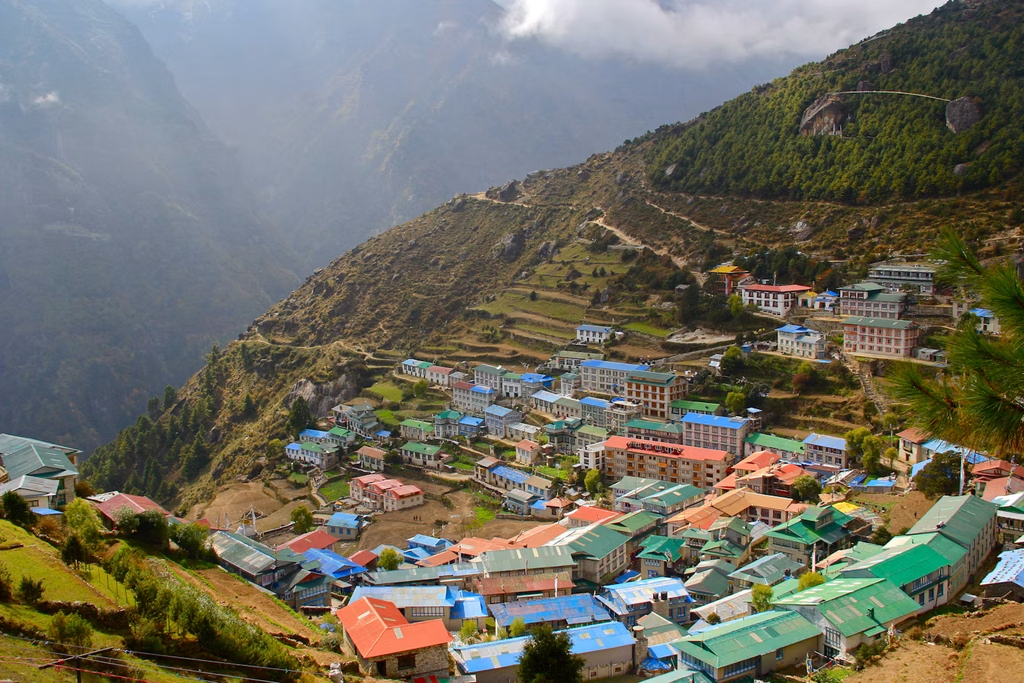
Namche is an important staging post on your route of acclimatization, with trails leading up towards Syangboche, Hotel Everest View and Khunde. This gives plenty of time to get used to the altitude before heading back to your lodge.One of these villages is Namche which is an important acclimatisation stop after Phakding.
Dingboche
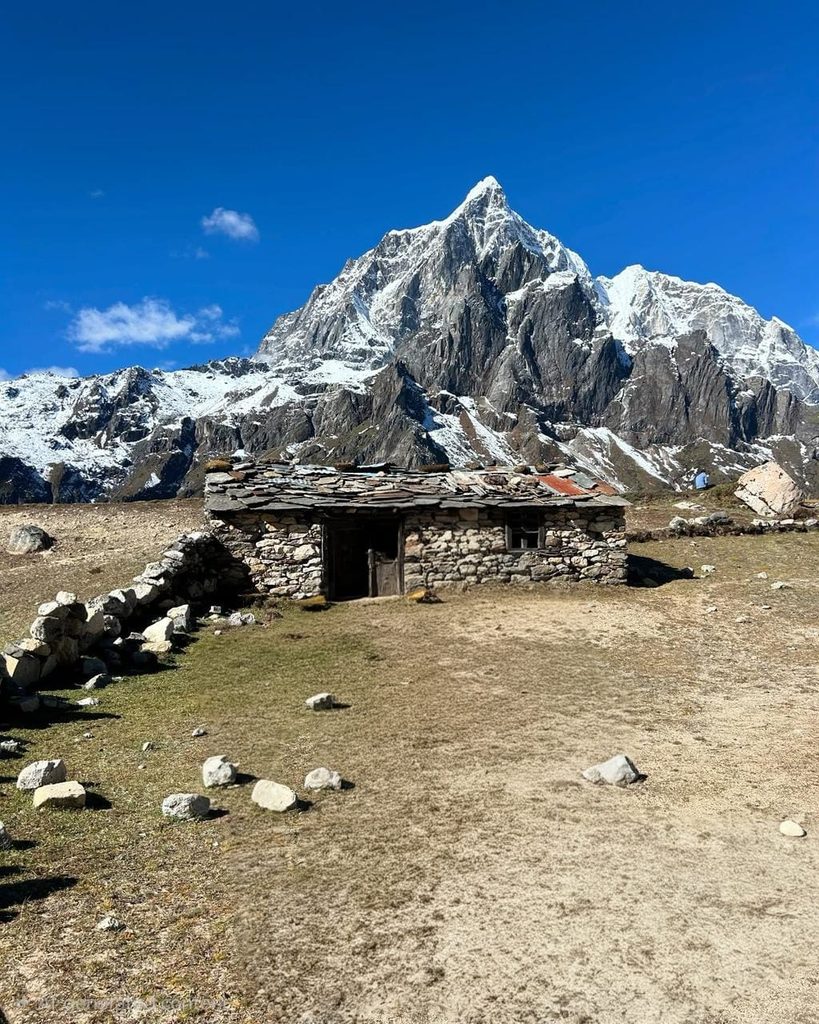
Another important acclimatization stage is Dingboche before Lobuche and Gorak Shep. The slopes around Dingboche give access to higher views, but the climbing of Nangkartshang is hard and not necessary for all trekkers.
Manang
Manang is an important acclimatization stop before climbing up to Yak Kharka, Thorong Phedi, and Thorong La. The hills and viewpoints near Manang offer acclimatization opportunities at controlled altitudes.
Samagaun
Samagaun is usually chosen for acclimatization before going further to Samdo and Dharamsala. Walking to Birendra Lake and even climbing along the Manaslu Base Camp trail gives trekkers varied exertion; no one has to cover the longest trail in a day.
The Himalayan Rescue Association works seasonally with medical assistance in Manang and Pheriche; these two places are especially interesting due to altitude symptoms. It should be checked whether these services are active on the dates of your trekking.
Everest Base Camp Trek: How to Acclimatize Efficiently Before 5,364 Meters
Everest Base Camp Trek poses its own unique problem since many trekkers make the flight from Kathmandu all the way to Lukla, reaching high altitudes in a matter of hours.
The hike from Lukla to Phakding may end at a height that is below the height of the airport. This allows the trekkers to sleep at a slightly lower altitude on the first night.
However, the highest altitude of the trek does not necessarily pose the biggest acclimatization challenge. What matters most is the pace at which the trekkers reach the higher-altitude camp sites.
A Practical 12-Day Everest Base Camp Acclimatization Schedule
| Day | Route or activity | Overnight altitude | Gain from previous night |
| 1 | Lukla to Phakding | 2,610 m | Initial mountain night |
| 2 | Phakding to Namche Bazaar | 3,440 m | +830 m |
| 3 | Namche acclimatization | 3,440 m | 0 m |
| 4 | Namche to Tengboche | 3,810 m | +370 m |
| 5 | Tengboche to Dingboche | 4,410 m | +600 m |
| 6 | Dingboche acclimatization | 4,410 m | 0 m |
| 7 | Dingboche to Lobuche | 4,910 m | +500 m |
| 8 | Lobuche to Gorak Shep, visit EBC | 5,140 m | +230 m |
| 9 | Kala Patthar, descend to Pangboche | 3,930 m | −1,210 m |
| 10 | Pangboche to Namche | 3,440 m | −490 m |
| 11 | Namche to Lukla | 2,840 m | −600 m |
| 12 | Fly to Kathmandu | Approximately 1,400 m | Return to lower elevation |
Altitudes are approximate and can vary in different lodges, from different map sources and depending on your route. This is a commercially used sample itinerary, it may not be suitable for everyone as far as giving you enough time to acclimatise. The 830m and 600m overnight gains are above the conservative ascent advice and should be noted.
Why the Namche Acclimatization Day Matters
Namche is a settlement located on a very steep mountainside above the Dudh Koshi Valley. The trekkers who arrive at Namche from Phakding have by then covered quite a considerable distance, especially considering the difficult uphill part which starts right after passing the Hillary Suspension Bridge.
Perhaps the difficult part about the ascent is that one gets elevated quite quickly as the final hours of travel progress. Another night spent in Namche will give one enough time to react prior to continuing their travel to Tengboche. An average exercise for acclimatization purposes can be a walk towards Syangboche and the Everest View Hotel.
It is not about covering all the attractions around. A reasonable walk will give the body some time to rest and adapt.
What Makes Dingboche Different From Namche?
In Dingboche, the trekkers are already above 4,400 meters. Shortness of breath when climbing will be felt more clearly; appetite could decrease, and recovery from the strain will be slower. It should be noted that around the village there are mountains higher than the village itself – the slopes of Nangkartshang.
While Nangkartshang is commonly referred to as a mountain at approximately 5,083 meters, it is not necessary to climb to the top in order to properly acclimatize. For most trekkers, an easier hike up and down will be better.
Annapurna Circuit Acclimatization Before Thorong La Pass
The height of crossing the Thorong La Pass is approximately 5,416 meters. Difficulties are created by a combination of altitude, cold, terrain, and a long walking day. Depending on the overnight stay, trekkers can start crossing before dawn.
Compared with Everest Base Camp, where the highest point is usually reached on foot before returning to low altitude, it is necessary to cross the pass while completing the Annapurna Circuit.
Acclimatization From Chame to Manang
The traditional route through Annapurna starts from Chame, goes through Upper Pisang, and then on to Manang. They all vary in terms of altitude and openness.
The selection of Upper Pisang as an overnight stop will alter the sleeping altitudes in comparison with a route that uses some lower overnight point.
Manang, however, is especially valuable due to the fact that the area around it allows trekkers to walk in various directions without going to the pass immediately.
For example, trekkers can take a short walk up a mountain to see the view or travel along some trail that borders Gangapurna Lake.
All long and difficult walks should be done depending on personal fitness level, not as a necessity.
Why Reaching Thorong Phedi Early Is Not Always Better
From Manang onward, the general path heads for Yak Kharka, Ledar, and Thorong Phedi. Itinerary plans sometimes include staying overnight at High Camp, which is situated above Thorong Phedi.
By staying at High Camp, the trekker’s walking distance on the next day is shortened; however, high altitude exposure will occur.
If the trekker is not adequately acclimatized to the place, then a shorter route on the summit day might not make up for the disadvantage of staying the previous night at high altitude.
This consideration should take into account previous nights, any symptoms, weather forecast, and the climbing abilities of the group.
A trekking guide must also consider the available accommodations, as a change of plan at night might bring some problems.
Manaslu Circuit Trek: Acclimatization at Samagaun and Samdo
Manaslu Circuit trek ascends gradually through river valleys to reach higher Himalayan villages of Nubri. The landscape begins to change significantly from Namrung to Lho.
From green forested slopes to open valleys, arid slopes and mountain scenery, it is an important village before crossing Larkya La Pass (at around 5,106 m).
Acclimatizing at Samagaun
Samagaun has a number of opportunities for a day spent without moving on to the next night’s destination. A walk to Birendra Lake can be considered one choice, depending on the location of the lodge and the condition of the trail.
A trip towards Manaslu Base Camp would have an opportunity to get used to a little higher altitude but would require a much harder hike. It is not recommended for everybody as a matter of course, especially for a first-time trekker.
It might be better for somebody, having just got to Samagaun after a hard day from Lho, to take a shorter hike and rest. The main thing is how well they are acclimatized to continue to Samdo.
Trip Inquiry
"*" indicates required fields
Should You Take Another Acclimatization Day at Samdo?
Samdo typically lies around 3,860 meters in elevation. It is closer to the higher pass and provides access to adjacent valleys and ridge areas. An additional day may also be useful for those that need to take their time to get to Dharamsala.
However, this should not be decided purely by whether you have 1 or 2 days of trekking. Take into consideration how much ascent you have done recently, how you are feeling and the conditions of your trek. In case one comes in with continuing symptoms, a descent is required instead of another high-elevation excursion.
Langtang Valley Trek: Managing the Climb Toward Kyanjin Gompa
Langtang Valley is usually regarded as one of the easiest Himalayan trekking destinations since it is possible to get there by road from Kathmandu.
Despite road access, altitude hazard still remains. Trekkers normally visit Lama Hotel, Langtang Village, and Kyanjin Gompa, which is located at around 3,870 meters, while adjacent viewpoints are located much higher.
Why Kyanjin Ri and Tserko Ri Require Different Planning
Both Kyanjin Ri and Tserko Ri will prove to be great places to go hiking! The view from Kyanjin Ri would likely make for an easy hike if you have properly acclimatised.
Tserko Ri (usually said to be around 4,984m high) will require a long ascent from Kyanjin Gompa. The height is not the only thing to consider. If you just got to Kyanjin, you won’t be able to go up to near 5,000m straight away.
The weather, how long until sunset and how long the descent will take should also be considered. If you are pressed for time, it’s better to go for a less high viewpoint.
Is Climbing High and Sleeping Low the Best Acclimatization Technique?
“Climb high and sleep low” refers to being at higher altitude during a portion of the day and then coming back down to lower altitude to sleep. The phrase is popular in Himalayan trekking and climbing, although the advantages should not be exaggerated.
Controlled exposure to high altitude during the day could enhance the ascent itinerary that is properly planned. It does not replace the frequent jumps in sleeping altitude.
How the Technique Works on a Teahouse Trek
Let us take the case of a trekker who sleeps at Dingboche, which is located at 4,410 meters altitude. When going out for acclimatization, the trekker goes up to an appropriate place above the village, stays there for some time, and comes back to Dingboche to sleep.
This way, the trekker gets exposure to a higher altitude without being exposed to the extra burden of sleeping at the same place. At the same time, the trekker can judge their reaction to exercise.
Nevertheless, the aim of the activity is not to push the body to the limits. If the trekker experiences such things as headache, nausea, etc., which may be symptoms of altitude illness, they should not go up for acclimatization.
How Long Should an Acclimatization Hike Last?
There isn’t a set time frame or distance (in terms of vertical feet) to hike for acclimatisation.
A suitable hike depends on your starting point, level of experience, how you are feeling, fitness level and what the conditions are like. A moderate pace hike will be fine. A full day hike may not be necessary.
A gentle walk around your local hillside might be suitable for a fit group. If the trekker is feeling poorly after their climb the previous day, they could benefit from taking it easy and seeking advice.
When Should You Skip the Acclimatization Hike?
The walk should be reconsidered when a trekker experiences:
- New headaches and nausea,
- Regular vomiting, or unable to eat and drink properly,
- You feel very tired and struggling to move,
- Breathing difficulties.
- Incoordination or confusion.
The last two symptoms need to be discussed with someone immediately as they can be signs of altitude sickness. If you aren’t feeling like doing any climbing then this day isn’t essential.
Can Diamox Help You Acclimatize Faster on a Nepal Trek?

Diamox is a trade name for acetazolamide, a prescription drug which prevents and treats some types of altitude sickness.
This particular drug is most useful in situations where there is a rapid ascent which cannot be avoided.
It increases the loss of bicarbonate from the body via the kidneys and causes better breathing and oxygenation.
Although it works well, this drug must be taken after consultation with a competent medical professional.
Recommended Acetazolamide Use for Altitude Acclimatization
The CDC provides the following commonly used adult preventive regimen.
| Medical consideration | CDC guidance |
| Typical adult preventive dose | 125 mg twice daily |
| When preventive treatment begins | The day before ascent |
| How long treatment continues | During the initial altitude exposure and longer while ascent continues, as indicated |
| Higher body weight | Different dosing may be recommended |
| Common side effects | Tingling sensations, increased urination, altered taste of carbonated drinks |
| Important precautions | Medication allergies, kidney or liver conditions, electrolyte disturbances, interactions, and other individual factors require medical review |
These details describe published clinical guidance, not a personal prescription.
It is important to tailor advice to individuals who have any relevant medical issues, pregnancy concerns, drug interactions or history of severe adverse drug reactions.
Does Diamox Allow You to Skip Acclimatization Days?
No. There are some physiological changes that take place much faster with acetazolamide, although the drug cannot ensure complete protection against altitude sickness. For instance, the person who takes Diamox may experience acute mountain sickness, high-altitude cerebral edema, or high-altitude pulmonary edema. Therefore, the medication is not an excuse for disregarding the symptoms and carrying on with the dangerous climb.
Likewise, increasing the dose without consulting a doctor will not ensure better acclimatization and will lead to additional adverse reactions.
Can You Start Diamox After Symptoms Appear?
Acetazolamide can also be used in the treatment of acute mountain sickness, but the treatment depends on the symptoms and their severity.
A trekker experiencing mild AMS can stay at the current elevation with proper treatment.
However, worsening symptoms demand another approach. No drug is ever supposed to postpone an urgent descent.
While dexamethasone and altitude sickness drugs have their purposes, some of them only help to relieve the symptoms and do not facilitate quick acclimatization.
Does Drinking More Water Make Acclimatization Faster?
Hydration helps in optimal physical performance at altitude. At high altitudes, fluid loss may be increased through respiration, particularly under cold and dry conditions.
Physical exercise and perspiration cause further fluid loss. But forcing additional liters of water each day is not healthy.
Overhydration can reduce the sodium content in blood, leading to a condition called hyponatremia, whose symptoms mimic altitude sickness and include headache, nausea, and mental confusion.
How Much Water Should You Drink While Trekking?
It’s hard to establish an exact amount per day for everyone who is trekking. The fluid needs vary based on temperature, activity, food, body size, etc.
A trekker from Phakding to Namche under bright sun will need more fluid than someone relaxing inside on the same day.
Thirst, urine and general well-being offer useful data, though none of them is entirely accurate. If the urine remains always dark colored, it may indicate dehydration. If urine is completely clear throughout the day, it means too much fluid has been taken, especially if it has exceeded thirst
Is Garlic Soup Useful for Altitude Sickness?
Garlic soup is a popular option in Himalayan tea houses and often appears in traditional advice about adapting to altitude. It is a tasty hot way to ensure you’re eating and drinking.
However, there is no real scientific evidence that garlic soup will prevent acute mountain sickness or help you adapt to the altitude. This goes for all claims that certain types of tea, ginger drinks or local foods can be used as an alternative to medically proven altitude precautions.
They can be added to your diet if appropriate, they shouldn’t influence your decision to continue upwards.
How Can You Tell Whether Your Body Is Acclimatizing Properly?
It will never be possible to be 100% certain that someone has had a successful acclimatisation.
The best method would be to look at multiple factors. If they have slept at a higher altitude, then looking at multiple factors will help.
Trekking should feel easier; any symptoms should either improve or get worse. They should also be able to eat and function.
If they are feeling better after an extra night at altitude, they may be getting used to it. If they are feeling worse, then they need to be assessed.
Signs That Acclimatization May Be Progressing Well
Possible encouraging signs include:
- Walking at the usual pace is not as strenuous as it was upon arrival.
- The appetite is not abnormal.
- No headaches occur, rather than recurring or becoming worse.
- Sleep becomes increasingly easier.
- No unusual shortness of breath occurs from performing normal actions.
- No new nausea, dizziness, mental confusion, or loss of coordination occurs.
These symptoms are helpful information, but do not provide any guarantee of being healthy. One might be fine at 3,500 meters, yet suffer from AMS when ascending to 4,200 meters. Every altitude gain provides a new risk period.
Should You Use a Pulse Oximeter?
The fingertip pulse oximeter provides an estimated reading of peripheral oxygen saturation levels (usually called SpO 2).
This can be a useful additional piece of equipment for guides and trekkers if regular readings are obtained.
As you ascend to higher altitudes, your blood oxygen saturation levels will drop. Individual readings may vary.
The accuracy of the readings may vary depending on cold fingers, movement, poor circulation and limitations of the equipment.
A reading which would be concerning at sea level may be normal at high altitude. However, a normal reading does not exclude the possibility of altitude illness.
Why There Is No Universal Safe Oxygen Saturation at 5,000 Meters
One common mistake is to look for a magic number in the form of an oxygen percentage that would prove that the person may continue his journey safely towards Everest Base Camp.
There is no such number.
Depending on the elevation level, the oxygen saturation level will vary according to how well the person has acclimatized to the conditions, breathing rate, activity level, and sleep status.
The number needs to be read along with other parameters like symptoms, ascent history, and past results of that particular trekker.
The important issue is not to ask whether the number is above 80% or not. The important question is whether all together they make the picture of an ill trekker or a stable one.
How Should Trekking Guides Monitor Acclimatization Each Day?
Having a good plan is only half the battle; it is how you react to the individuals on the trek.
You may have two trekkers sleeping in the same lodge, eating the same food and covering the same distance but have completely different reactions to the altitude. Every day you should have one-to-one conversations with your trekkers.
Morning Health Assessment Before Leaving the Lodge
Before setting off on your trek for the day, you should ask each of your trekkers the following questions.
Did you have any of the following symptoms yesterday once you arrived?
- Headache
- Nausea/Vomiting
- Dizziness, weakness or confusion
- Shortness of breath at rest.
- Did you have any issues eating or drinking?
- Have your symptoms improved, stayed the same or got worse?
This should help you to decide if it is suitable to continue ascending.
A good guide will keep a record of how they are improving over the course of the trek. This is important as sometimes people don’t like to admit they are struggling.
Why Group Pressure Can Become Dangerous
In case of a fixed-departure trek, one participant is likely to worry about slowing down everyone else. This could lead individuals to hide their headache or nausea. A good policy should clearly state before departure that being sick does not mean being weak and misbehaving.
For guides, there should be a strategy to handle the situation regarding separation, extra accommodation, or descent in case one participant cannot proceed. Otherwise, the medical decision might be mixed with business logistics.
What Should Guides Record?
A basic daily tracking report may contain the sleeping altitude, any symptoms, the problems with food and fluid intake, the relevant vital signs, and the decisions for the next day.
Measuring pulse oximetry can be included, however, the symptoms are the most important. The report is useful in case of medical assessment of a trekker. Medical workers would have some understanding of how long the symptoms were present and how fast the condition developed.
Where Can Trekkers Receive Medical Assistance for Altitude Sickness in Nepal?
Medical assistance will be available at various locations along the trekking path but is increasingly scarce once one goes deeper into the valleys. One of the organisations in Nepal working since 1973 is the Himalayan Rescue Association (HRA).
The organisation runs permanent aid camps in Pheriche (Everest region) and Manang (Annapurna Trail). The camps have qualified doctors who are available for free treatment at those places for a significant portion of the trekking season.
| Medical facility | Approximate altitude | Location and relevance |
| HRA Pheriche Aid Post | 4,250 m | Medical assistance along the Everest trekking corridor |
| HRA Manang Aid Post | 3,550 m | High-altitude medical support before Thorong La |
| HRA Everest Emergency Room | 5,350 m | Seasonal medical services at Everest Base Camp |
| Kathmandu hospitals | Approximately 1,400 m | More comprehensive assessment and treatment following evacuation |
Different aid camps may differ in terms of accessibility, equipment present, as well as the availability of personnel. Hence, trekkers are advised to check with the individual aid post for the latest information.
How Does Helicopter Evacuation Work?
If the climber suffers from serious altitude sickness, then the guide or the operator will arrange for evacuation by helicopter with the help of the insurance company, the rescue organization, or any other necessary local agency.
It all depends on the physical state of the person, his location, weather conditions, visibility, and availability of helicopters.
The helicopter cannot land at the spot where the person feels sick.
The person may be shifted to a place where he can be picked up by the helicopter. Still, the shifting should be done cautiously, especially in cases of breathing problems and neurological problems.
It is necessary to make sure that one’s insurance covers the necessary amount for altitude, medical aid, rescue, and evacuation and also whether there are any exceptions to it.
A helicopter rescue operation cannot be considered a sure thing in the Himalayas.
Frequently Asked Questions About Acclimatization in Nepal
1. How many days does it take to acclimatize to 3,000 meters?
This can normally be achieved over the course of a few days; however, those who ascend quickly from sea level may need more time. If symptoms occur during the night, additional time may also be required.
2. Can you acclimatize to 4,000 meters in two days?
Physiological changes will occur within 2 days, but full acclimatisation will not occur this quickly. It is difficult to determine if the ascent was suitable depending on altitude experience, sleep altitudes and sensitivity.
3. What is the fastest way to acclimatize without medication?
Using a cautious strategy when ascending overnight will give the best results. There is no non-pharmacological treatment which will guarantee rapid adaptation for everybody.
4. Can you get altitude sickness below 2,500 meters?
Yes, altitude sickness normally occurs above 2500m; however, sensitive people can get the disease even at low altitudes.
5. Does breathing deeply help with altitude acclimatization?
An increased respiratory rate will naturally occur. Using breathing exercises may help with relaxation and increasing your ventilation; however, this cannot replace physiological adaptation.
6. Can you sleep at 5,000 meters without acclimatizing?
Sleeping at 5000m can be dangerous if you have not been exposed to such heights before and shouldn’t really be considered a typical hiking option.
7. Is Everest Base Camp harder to acclimatize for than Annapurna Base Camp?
Generally speaking, you need to be exposed to more high altitude. Annapurna Base Camp will have you sleeping at around 4130m, whereas most Everest trekkers sleep at an average of 4900m.
8. Can you develop altitude sickness after several symptom-free days?
A trekker may be able to tolerate an altitude, but when you climb further, you will still feel the effects. Just because you have acclimatised to 3500m does not mean you can tolerate 4500m.
9. Does age determine how quickly you acclimatize?
You can not solely determine if someone will suffer from altitude sickness based on their age. Other factors could include medical conditions and your ascent profile.
10. Can a beginner trek safely above 4,000 meters?
Yes, there are novice trekkers who have been able to trek successfully at high altitudes. Your status as a novice does not impact how capable you are of tolerating high altitude.
11. Is it better to trek slowly for ten hours or quickly for five hours?
The amount of time taken could also influence how effectively you acclimatize. Elements such as sustainable exercise, total workload, altitude and symptoms of altitude sickness may come into consideration. You could encounter some problems when you walk too slowly and become tired or aggressive.
12. Can smoking affect your experience at high altitude?
Some respiratory and cardiovascular effects can result from smoking. You will find it difficult to trek because of this problem. It would seem sensible to avoid smoking, but this will not indicate how susceptible you are to altitude sickness.
13. Do children acclimatize more quickly than adults?
Children can be susceptible to altitude sickness. This can make it difficult to identify symptoms. Children should have a well-planned itinerary and age-appropriate medical consultations.
14. How long do acclimatization benefits last after descending?
The effectiveness will get worse if you descend to lower altitudes. However, you will still have adapted. How long this lasts will depend on factors such as how high the altitude was, how long you were there for and how well you adapted.
15. Should you descend if altitude symptoms disappear after taking medicine?
In some mild cases, this may not be the case. Taking medication to relieve your symptoms does not mean you have fully recovered. You should be careful when deciding to continue hiking. If your symptoms get worse, then you should be careful.
Final Thoughts: The Fastest Safe Way to Acclimatize in Nepal
An efficient high-altitude strategy will allow time to adapt, but it won’t be too long.
The most important decisions when trekking to Everest Base Camp will revolve around your route to Namche, plus the trip up to Dingboche. The preparation before heading up to Thorong La on the Annapurna Circuit is very important. The
Manaslu trekkers must consider the risk they are taking before Samdo and Larkya La. The trekkers visiting the Langtang region should also consider how different the altitude requirements are for Kyanjin Gompa and the viewpoints around.
Acetazolamide can help with ventilatory acclimatisation in some circumstances; however, it doesn’t make risky routes safe.
Choosing the correct route, monitoring symptoms, and being prepared to change your plans is fundamental to high altitude trekking in Nepal.
The best way to acclimatise as quickly as possible whilst having a successful trek to your destination without any avoidable altitude-related complications is the best method.
Table of Contents

