Your awe-inspiring 2026 journey starts here! Fixed Departures: Upper Mustang – 5th Aug, Annapurna Circuit – 8th Aug, 11th Sept, Nar Phu Valley – 24th Oct, 13th Nov


Everest Panorama Trek
Trip Info
Duration
11 Days
Trek Region
Everest
Destination
Nepal
Max. Altitude
3,860m
Group Size
2 - 12
Grade
Moderate
Activity Per Day
4 to 6 hours
Best Season
January to May, September to Mid-December
Activity
Trekking in Nepal
Start/End Point
Lukla / Lukla
Everest Panorama Trek is an easy trek in the foothills of Mount Everest region starts with an easy stroll on the rim of the Kathmandu Valley, where we gain a first distant view of Himalayas. Then after a thirty minutes flight from Kathmandu landing at Lukla‘s tiny airstrip, the adventure really begins.
This trek follows trails through Lukla, Namche Bazar to the Tengboche Monastery (3860 meters). Although it’s a short trek that offers you a great view of the highest snow-capped peaks in the world, including Mt. Everest, Mt. Lhotse, Mt. Thamserku, Mt. Amadablam.
The popular myth of’ Shangri La’ will seem all-too-real by visiting a succession of Sherpa villages, surrounded by fluttering prayer flags and gleaming snow-capped peaks.
This trek definitely gives a great introduction to the lifestyle of Sherpa, country culture, and fine mountain views. This is a popular destination for the first time hikers to Nepal. Suitable for people who don’t have enough time to walk into the high mountains for longer.
Everest Panorama Trek Difficulty
There is no need for prior trekking experience to do this trek. Anyone who is fit and healthy enough for 4-6 hours of walking a day can manage moderate treks. These treks involve only lower altitude with daily climbs of around 300 to 600m. on well-maintained trails and easy access to local amenities.
Things to Remember Before you Trek
The delay or cancelation of the flight is temporary and it is the most unwanted things. There is a reason for the cancelation of the flight and the weather is one of the most obvious reasons. After all, in heavy rain, thick fog, and thunderstorm, neither an airline nor should you fly.
Everyone is concerned about their safety. No airline wants to stsdsrand its passenger, but in bad weather, this is better than flying. In Kathmandu, it may be sunny, but there may be heavy rain/snowfall in Lukla.
Please check out here best time to visit Nepal for the best trekking seasons. The weather can not be predicted. We therefore, advise you to allow one or two days extra in your trip, in case your flight get canceled or delayed
Is Everest Panorama Trek 11 Days Itinerary Suitable For All?
The Everest Panorama Trek 11-day itinerary is perfect for all kinds of trekkers, including beginners, families and those with limited time. Unlike longer Everest treks like the Everest Base Camp Trek that goes up to Kalapatthar (5,545 meters) and reaches Everest Base Camp itself (5,364 meters), this trek only goes to a maximum altitude of about 3,880 meters at Tengboche.
The lower altitude means there is less chance people will suffer from altitude sickness if they haven’t previously trekked at high altitudes. Acclimatization days, as well as shorter walking days, are built into the itinerary so you have an easy and enjoyable trekking experience.
This trek provides a combination of nature, culture, and adventure in the Himalayas with halt at the famous sites like Namche Bazaar and Tengboche Monastery. You also have a glimpse of spectacular views of Mt Everest (8,848m), Lhotse (8,516m) and Ama Dablam (6,812 m). Trail directions are clear and you will be accompanied by helpful expert guides providing safety and convenience.
Whether you are a first-time trekker in Nepal, a family with children or a busy professional looking for a short Himalayan adventure, the Everest Panorama Trek is an excellent introduction to the Everest region that affords glimpses of 8000-meter peaks and an introduction to Sherpa culture and Buddhist heritage without the struggle of high altitude.
Can Mount Everest panorama be Seen on Everest Panorama Trek?
Yes, the Mount Everest panorama can be seen during the Everest Panorama Trek, with the highest point of the trek being Tengboche Monastery at 3,880 meters. From Tengboche, you will have a stunning view of Everest, though it’s partially blocked from view by other mountainous giants such as Lhotse, Nuptse, and Ama Dablam.
The best viewpoint to get a look at Everest from Tengboche is on the grounds of the monastery itself or from the hill situated adjacent which will bring you to an unimpeded vantage of these Himalayan behemoths. Before arriving in Tengboche, there are several points along your way where, depending on conditions, you can catch glimpses of Everest.
When departing Lukla heading towards Namche Bazaar, this may be your first sighting near Monjo or on top nearing Namche Bazaar itself. The trails between Namche and Tyangboche are also accompanied by occasional views, particularly when descending after Sanasa going uphill before Phunki Thenga.
Everest Panorama Trekking in Nepal Main Attractions
Lukla
The adventure starts with a picturesque flight to Tenzing-Hillary Airport, known for its adrenaline-pumping landing strip and stunning views of the Everest region. It’s a short flight, but passengers are treated to amazing views of the world’s highest peaks and this really gets the heart pounding for what lies ahead in the coming days. Trekkers also arrive officially in Khumbu at 2,860 meters.
Phakding
Located next to the glistening Dudh Koshi River, Phakding is where you spend your first night on the trek. It gives you that picturesque riverside feeling and an insight into traditional Sherpa village life. Based in the Chaurikharka region, this will be trekkers’ first taste of what is in store on the Everest trail – abundant culture surrounded by stunning natural beauty. With water sounds lulling you to sleep and plenty of greenery around, it makes for a perfect acclimatization stop.
Namche Bazaar
The gateway to Sagarmatha National Park, Namche Bazaar is a perfect stopover for acclimatization. After you’ve spent some time exploring this busy Sherpa village at an altitude of 3,440 meters, visiting the Sherpa Culture Museum and the Everest View Hotel located on the outskirts of the town for its views of Mount Everest and other adjacent peaks, you’ll realize why this place is so special.
Tengboche
Witness spiritual bliss amidst nature’s grandeur. Tengboche makes for an enchanting sight with close-up views of Everest, Lhotse and Ama Dablam from its premises. The monastery itself, situated at 3,867 meters, is one of the largest in the Khumbu region. It’s not only a religious centre but also provides peace and tranquillity.
- Experience breathtaking views of Everest, Lhotse, Ama Dablam and other giants of the Himalayas.
- Visit the historic Sherpa capital town and discover its history and culture.
- Hike to one of the Khumbu’s loveliest Buddhist monasteries.
- Experience the rich culture and hospitality of the Sherpa people.
- Hike through beautiful forests, suspension bridges, and stroll by picturesque Sherpa villages.
- Perfect for first-timers or time-constrained trekkers, this easier and shorter trek.
Itinerary
Our experienced Sherpa guides have walked the Everest region many times and know how to make the most of your time in Nepal on our Everest View Trek itinerary. From visiting the vibrant Namche Bazaar to being face-to-face with Everest, Lhotse and Ama Dablam, this adventure is both challenging and breathtakingly beautiful. We also build acclimatization days into our trek which makes it a safe and enjoyable trip through the Khumbu region.
Day 01- Arrive in Kathmandu.
Upon your arrival in the Kathmandu airport after completing your custom formalities Visa, etc. pick up your luggage and look for our airport representative from Himalaya Discovery Adventures, who will display your name on the board at the arrival gate.
You will be greeted by our representative and transferred to your hotel by private tourist vehicle. Overnight in Kathmandu.
Distance : Free day
Duration : Free day
Altitude : 1400m
Meals : Breakfast
Accomodations : Hotel
Place : Swayambhunath Stupa, Boudhanath Stupa, Pashupatinath Temple, Kathmandu Durbar Square, Patan Durbar Square, Bhaktapur Durbar Square, Garden of Dreams, Thamel.


Day 02- Free in kathmandu for sightseeing and pre trip briefing and gear checks.
Today is free for sightseeing in Kathmandu. You may wish to visit Durbar Square in the heart of the old city where the old Royal Palace, with its intricate woodcarving is located. The whole area is a maze of temples and images. Leading away from the square in all directions are narrow alleys, full of the most amazing variety of shops and stalls.
Some of these landmarks are considered World Heritage Sites including the historic Bhaktapur Durbar Square, the famous ‘Monkey Temple’ Swayambhunath and Buddhists shrine Buddhanath which is one of the largest Stupas in the world.
There will also be a full trip briefing today with gear check. In case you need to hire or buy equipment locally there will be time to do this today. Overnight in Kathmandu.
Distance : Free Day
Duration : Free Day
Altitude : 1400m
Meals : Breakfast
Accomodations : Hotel
Place : Nagarkot, Dhulikhel, Bhaktapur, Patan, Kirtipur, Budhanilkantha, Changu Narayan.


Day 03- Fly to Lukla from Manthali and trek to Phakding.
Everest Base Camp trek begins on the second day with a scenic flight from Manthali airport to Lukla Tenzing Hillary airport (2,804 m).
Upon arrival at Lukla, you will meet our porters who will be carrying your bags. The Everest panorama trek starts after a short glimpse of the village of Lukla, where you will pass the village of Chaurikharka and then descend towards Dudh Koshi and Ghat.
From there, you follow the trails to Phakding via the bank of the Dudh Koshi river and stay overnight at Phakding.
Please note: Kathmandu to Lukla flight has been moved to Manthali airport, Ramechhap in peak trekking season Spring (March, April, May) and Autumn (September, October, November) due to increased traffic and since March 2019 renovations at Kathmandu airport.
Manthali airport can be reached by road from Kathmandu within 4 to 6 hours drive. This means you need to wake up early in the morning around 2:30 am to take a drive and catch your Lukla flight from Manthali early in the morning. Overnight at guesthouse.
Distance : 8 km
Duration : 3 hrs
Altitude : 2886m
Flight Hours : 5-20 minutes (Manthali to Lukla)
Meals : Breakfast- Lunch- Dinner
Accomodations : Tea Houses
Place : Lukla Airport (Tenzing-Hillary Airport), Chaurikharka Village, Ghat Village, Phakding Village.


Day 04- Trek to Namche Bazaar.
We continue trekking along the banks of the Dudh Kosi, crossing this majestic river many times on exciting suspension bridges laden with prayer flags. After entering Sagamartha National Park, the trail climbs steeply with breathtaking views. Namche Bazaar known as the Gateway to Everest which is home to many quality restaurants, hotels, lodges, shops, Money exchange, internet cafe and a bakery. Namche is one of the biggest villages along the whole Everest trail. Overnight at guesthouse.
Distance : 10-12 km
Duration : 5.30 hrs
Altitude : 3440m
Meals : Breakfast- Lunch- Dinner
Accomodations : Tea Houses
Place : Sagarmatha National Park Museum, Everest View Hotel, Namche Monastery, Syangboche Airstrip, Local Markets


Day 05- Rest day / Discover around Namche Bazaar.
We will spend a day here in order to acclimatize and adjust to the thinning of the air. As well as a short trek where a museum is celebrating the traditional customs of the Sherpa people. Today we hike up the Syangboche Airport around Everest View Hotel.
From this point, we can see rewarding views of the Himalayas with a stunning sunrise and sunset over the panorama of Khumbu peaks. Overnight at guesthouse.
Distance : Free day (optional short hikes)
Duration : Free day
Meals : Breakfast- Lunch- Dinner
Accomodations : Tea Houses
Place : Sagarmatha National Park Museum, Everest View Hotel, Namche Monastery, Syangboche Airstrip, Local Markets, Hillary Memorial School.


Day 06- Trek to Tengboche Monastery.
We trek to an altitude of 3860meters today. On reaching Tengboche your guide will tell you about the local monastery situated here. The group will be taken to observe a prayer ceremony either in the evening or morning depending on how the days trekking went. Overnight at guesthouse.
Distance : 10-12 km
Duration : 5 hrs
Altitude : 3860m
Meals : Breakfast- Lunch- Dinner
Accomodations : Tea Houses
Place : Tengboche Monastery, Ama Dablam Viewpoint, Panoramic Views of Everest, Lhotse, and Nuptse


Day 07- Trek back to Namche Bazaar.
Following down same trail, leaving the mountains behind us our descent takes us from Tengboche Monastery (3860 meters) before continuing back to the town of Namche Bazaar. Overnight at guesthouse.
Distance : 10-12 km
Duration : 5 hrs
Altitude : 3440m
Meals : Breakfast- Lunch- Dinner
Accomodations : Tea Houses
Place : Sagarmatha National Park Museum, Everest View Hotel, Namche Monastery, Syangboche Airstrip, Local Markets


Day 08- Trek to Lukla.
Finally, we return to Lukla where the trek began, which seems a lifetime ago. Enjoying time to reflect on the trek as a group and the personal achievement of all those who took part. Overnight at guesthouse.
Duration : 6 hrs
Altitude : 2804m
Meals : Breakfast- Lunch- Dinner
Accomodations : Tea Houses


Day 09- Fly back to Kathmandu.
Enjoying your last glimpse of the mountains you have recently visited for one last time on the 25 minute Scenic flight back to Kathmandu. On arrival in Kathmandu we are met and transferred back to hotel. You can rest and relax throughout the day. Overnight at a hotel in Kathmandu.
Distance : 138 km Flight Distance
Altitude : 1400m
Flight Hours : 35-40 minutes (Lukla to Kathmandu)
Meals : Breakfast
Accomodations : Hotel
Place : Swayambhunath Stupa, Boudhanath Stupa, Pashupatinath Temple, Kathmandu Durbar Square, Patan Durbar Square, Bhaktapur Durbar Square, Garden of Dreams, Thamel.


Day 10- Free day and farewell dinner in Kathmandu.
It’s also spare day in case of bad weather in Lukla. If you get interested to take some gifts from Nepal for friends and relatives, visit to some nearby shops or go out in Thamel for typical Nepalese goods which can be assisted by our guide or you can do it yourself too.
In the evening we will have a farewell dinner in a traditional Nepalese restaurant with cultural performances. Overnight at hotel in Kathmandu.
Distance : Free day
Duration : Free day
Altitude : 1400m
Meals : Breakfast- Dinner
Accomodations : Hotel
Place : Swayambhunath Stupa, Boudhanath Stupa, Pashupatinath Temple, Kathmandu Durbar Square, Patan Durbar Square, Bhaktapur Durbar Square, Garden of Dreams, Thamel


Day 11- Fly to home.
The trip concludes! Our representatives will drop you off at the airport, according to your flight schedule.
Distance : Free Day
Duration : Free Day
Altitude : 1400m
Meals : Breakfast
Place : Boudhanath Stupa, Pashupatinath Temple, Swayambhunath Stupa, Patan Durbar Square, Bhaktapur Durbar Square, Local Markets, Thamel


Not Satisfied with the Itinerary? We can customize a personalized itinerary to suit your preferences and requirements, ensuring your trip is exactly how you envision it.
Price Includes
- Airport transfers pick-up and drop-off.
- Three meals a day (breakfast, lunch and dinner) during the trek.
- Hot drinks (Tea, coffee, hot milk, hot chocolate ) three times a day.
- All accommodation during the trek.
- All necessary paper works, Everest National park entry permit.
- Trekking information management system (TIMS card) permit.
- Airfare both ways Kathmandu – Lukla – Kathmandu.
- English speaking Sherpa guide.
- The required number of staff and Porters to carry your luggage during the trek. (1 porter for 2 trekkers) Accommodation/salary/ food/drinks/insurance/equipment/medicine and transport for the staff.
- hiking pole(if it is required).
- All government taxes.
- Farewell dinner with culture show.
Price Excludes
- International airfare and Nepal entry visa.
- Tips for guide/porters (tipping is expected)
- Travel insurance which covers emergency Rescue and Evacuation.
- Sightseeing / Monument entrance fees in Kathmandu.
- Any others expenses which are not mentioned on the Price Includes section.
Add-Ons for Your Everest Panorama Trek
An extra layer of Everest Panorama trek adventure with Nepal’s beautiful natural beauty and adventure activities before or after your trek. Some possible options:
- Trishuli River Rafting
- Heli Sightseeing
- Kathmandu Food Tour
- Paragliding in Nepal (Pokhara)
- Ultra-Light Flight
- Kathmandu Day Tour
- Bardia Jungle Safari
- Chitwan Jungle Safari
- Bungee Jumping
Sleeping Bag Rental
For the Everest Panorama Trek, we provide 4 season sleeping bags for rental at a cost of USD 30. Comfortable, warm and good-quality sleeping bags are provided. If in case you lose or damage the sleeping bag while on the trek, then you will be charged USD 165 as a replacement charge; however, if you return it in proper condition, then no charges will be there.
Personal Porter Services
Lighten your trek with our porter facility. We provide you with the number of porters needed to assist in carrying your gear on the trek (1 porter for every 2 trekkers). The fee pays for their lodging, salary, meals and drinks, insurance, gear and transportation. If you need a little help with your pack, we can provide personal porters who will carry your 25kg pack for a mere $20 per day.
Everest Panorama Trek Trip Information
No matter if you are in Kathmandu or coming from overseas, we’ll be there to help you. We make sure that you have the right gear for the trek, get your permits ready, give you good tips on acclimatization and make sure you know everything about the trail prior to starting this epic journey into the Everest Panorama Trek.
Best Time, temperature, Weather Considerations
The best months to do the Everest Panorama Trek are during the autumn (September to November) and spring (March to May) seasons, where you will have stable weather, clear skies and mild temperatures.
Autumn in Nepal brings clarity after monsoons with unobstructed views of the Himalayas. Daytime temperatures range between 12°C-16°C and drop down potentially to -12°C at night. There are also festivities happening during this Time allowing for cultural immersion with your adventure.
The rhododendrons bloom in the spring, and there is generally more color on the trail. During the day, temperatures can be as high as 17 degrees Celsius to 25 degrees Celsius. At night, temperatures can drop drastically to minus fifteen degrees Celsius. Rains are a common occurrence this season. However, there are longer hours of daylight too.
Winter (December-February) It is a lot quieter on the mountain, and it’s also possible to encounter snow conditions at Gorakshep (-20 degrees Celsius).
During the monsoon season during the months from June to August, heavy rainfall, and during this Time, trails become slippery, which may also cause interruptions. This season is usually avoided for trekking because of the difficulties arising owing to weather.
Accommodations
During the Everest Panorama Trek, most of the accommodations are in teahouses or lodges, which are genuine family-run guesthouses with basic facilities.
In teahouses, rooms are typically twin-shared, and you will have to use shared toilet facilities; the bed will have a mattress and blanket. There is no need to bring a sleeping bag unless you want to be more warm at night while sleeping, as it’s quite cold up here.
Electricity is common, allowing you to charge your devices; some teahouses may ask a small fee for that. Wi-Fi is available in some lodges, but you need to pay for that as well. The dining area is often the warmest place of the teahouse, where trekkers gather and relax.
Meals
During the Everest Panorama Trek, trekkers will be provided three meals a day: breakfast, lunch and dinner at teahouses along the trail. Meals are prepared not only to fill the stomach but also to meet the local taste needs.
Breakfast will be served between 7:00 – 8:00, which includes Tibetan bread with honey or jam, porridge, muesli, pancakes and eggs. All these foods provide enough energy for trekkers to start their trekking day.
Noon is the Time when trekkers take rest in a teahouse and take Luch as a meal like dal bhat (boiled rice and lentil soup), Thukpa (noodle-containing soup), momos (dumplings), or fried noodles and rice. The food is a combination of protein and carbohydrate, which one has to consume to keep the energy level maintained. Suppers are more or less the same as lunch but with some extra food items like Sherpa stew—vegetable and noodle soup.
To help keep trekkers warm, hot beverages are served three times daily. Tea, coffee, Hot Milk, and hot chocolate are the beverages served. Other choices that trekkers can opt for are hot lemon and ginger tea, which helps with acclimatization and digestion. There is also butter tea, a traditional Tibetan beverage served with yak butter and salt, but the strong taste might not be for everyone.
FAQs at a Glance: Quick & Helpful
Do you have questions about Everest Panorama Trek? We’ve tried to answer most of the common queries here related to trail conditions, safety, emergencies and more so that you can be well-prepared for your trip. And if you have any other questions, feel free to reach out to us.
All Your Questions Answered in One Place
Do I need a guide for the Everest Panorama Trek?
Is it safe to drink water on the trek?
Can I do this trek solo?
What happens in case of an emergency?
Can I extend the trek to Everest Base Camp?
Join our Fixed Departure Group Trips
Our fixed group tours are thoughtfully scheduled and offer specific departure dates, providing a fantastic opportunity for both solo traveler and groups to come together. Join other guests on a memorable journey and share in the adventure of a lifetime!
Ready to create your perfect adventure? Use our trip planner to customize your itinerary and schedule according to your preferences. We’re here to help you tailor every detail to fit your unique needs.
What is the risk of Altitude Sickness during the Everest Panorama Trek?
Altitude sickness is the greatest risk to Everest trekkers. Though the Everest Panorama Trek is pretty safe in terms of long treks, the trek’s highest point of 3,880m poses minimal risk of Acute Mountain Sickness (AMS). AMS generally becomes a concern at heights of over 3,000m.
Trekkers are given ample time to acclimatize at Namche Bazaar (3,440m), thus reducing the vulnerability to AMS. Headache, dizziness, or nausea still occur regardless. Hydration, acclimatizing ascent, and avoidance of alcohol are preventatives to high-altitude sickness.
Although the trek does not push trekkers to such altitudinal extremes, helicopter emergency health cover and evacuation must be selected in order to maintain safety for travel. When an acceptable policy is employed, it guarantees effective evacuation when there is an emergency.
Physical Fitness For Everest Panorama Trek
Everest Panorama Trek goes up to as much as Tengboche Monastery at 3,867 meters, and thus is not as demanding as other altitude-based treks in the area. Generally, individuals with average fitness can do this trek, which involves 5-6 walking hours a day on mixed terrain.
Preparation is standard cardiovascular exercise like jogging, cycling, or hiking, preferably 8-12 weeks in advance of the trek. Combine this leg-building regimen of leg and core exercise that promotes endurance and stability on the trail too. Prior experience on a trek is helpful, but not strictly necessary for this trek.
What to Pack for Your Everest Panorama Trek - 11 Days?
Clothing:
- Moisture-wicking base layers (thermal tops and bottoms).
- Down or synthetic insulated jacket.
- Waterproof and windproof jacket and pants.
- Fleece/Soft-Shell Jacket.
- Trekking pants and shorts.
- Quick-dry T-shirts and long-sleeve shirts.
- Warm hat, sun hat, and buff/neck gaiter.
- Gloves (lightweight and insulated).
- Hiking socks and liner socks.
- Sturdy, broken-in, waterproof hiking boots; lightweight camp shoes/sandals.
Essential Items:
- Backpack: 30-40 liters rain cover
- Hiking poles;
- Sleeping bags (-10 to -15 rating);
- A UV-protected pair of eyeglasses
- Headlamps with reserve batteries
- Water bottles or hydration bladders 2 liters
- Water purification tablet or water filter
- Sunscreen with SPF 50 or above
- SPF lip balm
- Personal first-aid kit and essential medication.
- Toiletries (biodegradable soap, wet wipes, hand sanitizer); instant-dry towel
- Energy bars, nuts, chocolate
- Passport with photostat
- Trekking permits (Sagarmatha National Park/TIMS);
- Travel insurance (for high-altitude trekking);
- Cash (Nepali rupees) to pay tip and incidentals.
Everest Panorama Trek Altitude Chart
Altitude in:
Everest Panorama Trek Temperature Chart


Beautiful memories KBC Trek!
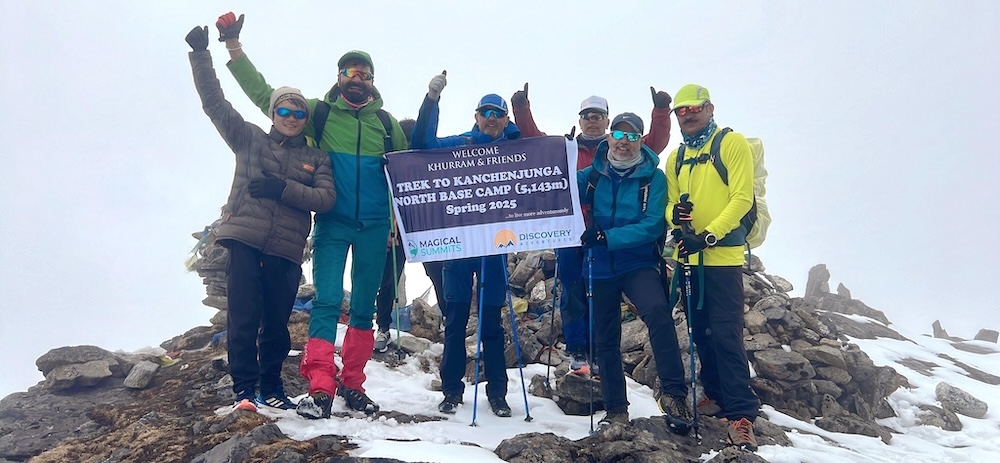
I was part of a group of 5 who booked the Kanchenjunga North Base camp trek through Himalayan Discovery Adventures. I was very impressed by the level and speed of service which was extended from the time I started conversation with booking team till the time I ended the trek. The guide was superb, knowledgeable of the trek and was very courteous. The support team back in Kathmandu led by Mr. Chhiring Sherpa went out of their way to make the experience of this amazing trek even more memorable. Not only would I recommend Himalaya Discovery Adventures to others but I would look them up again for my future treks in Nepal.
Beautiful memories KBC Trek!
I was part of a group of 5 who booked the Kanchenjunga North Base camp trek through Himalayan Discovery Adventures. I was very impressed by the level and speed of service which was extended from the time I started conversation with booking team till the time I ended the trek. The guide was superb, knowledgeable of the trek and was very courteous. The support team back in Kathmandu led by Mr. Chhiring Sherpa went out of their way to make the experience of this amazing trek even more memorable. Not only would I recommend Himalaya Discovery Adventures to others but I would look them up again for my future treks in Nepal.
An Unforgettable Journey on the Indigenous People’s Trail – Perfect for Every Adventure!
Great trekking company
My 80 year old father and myself did the Indigenous People’s Trail with Himalaya Discovery. They were absolutely wonderful!!! All communications with Chhiring Sherpa when we were still in Aus were clear and accurate. He made the planning very easy. Once we got to Kathmandu our guide met us at the airport and made the rest of our trip a piece of cake. They shaped the walk around what we wanted, were able to tailor each day’s walk to what suited best at the time. Lots of time spent with locals, eating and drinking with them for their evening dinners. Great people to be walking with. I will definitely be coming back and using this company every time I come here.

An Unforgettable Journey on the Indigenous People’s Trail – Perfect for Every Adventure!
Great trekking company
My 80 year old father and myself did the Indigenous People’s Trail with Himalaya Discovery. They were absolutely wonderful!!! All communications with Chhiring Sherpa when we were still in Aus were clear and accurate. He made the planning very easy. Once we got to Kathmandu our guide met us at the airport and made the rest of our trip a piece of cake. They shaped the walk around what we wanted, were able to tailor each day’s walk to what suited best at the time. Lots of time spent with locals, eating and drinking with them for their evening dinners. Great people to be walking with. I will definitely be coming back and using this company every time I come here.
Une Aventure Inoubliable au Népal avec Himalaya Discovery – Authenticité et Bienveillance au Rendez-vous!
Deux copines venues de très loin pour fêter les 30 ans. Le défi de Thorong La était quelque chose d’assez incroyable et stressant pour nous. 2 filles. Mais, HIMALAYA DISCOVERY est selon moi l’entreprise la plus locale et sincère que l’on peut trouver au Népal. C’est l’entreprise qui vous donne la force de réussir ! ????️
Ils ont une dizaine de guide/porteurs maximum.
Norbu et Pemba étaient si bienveillants , calmes et au petit soin chaque jour. Nous avons passé 10 jours exceptionnels. Ils sont devenus notre deuxième famille et c’est une certitude que nous reviendrons au Népal avec eux.
Chaque détail était important pour eux. Notre bien être , leur priorité. La réservation des meilleures chambres dans les maisons de thé. Nos meilleurs repas pour l’acclimatation et bien dormir.
Nous rassurer quand nous étions un peu inquiète d’une étape de marche.
Une flexibilité hors norme, même sur place lorsque nous avons voulu modifier quelque chose.
Vraiment je ne peux pas recommander une meilleure agence que celle là.
Vous pouvez y aller les yeux fermés.
Ce sont les meilleurs.
Ce sont les plus sympathiques.
Mais surtout : les plus authentiques.
Merci encore à mes amis népalais.
À bientôt
Laura de Corsica.

Une Aventure Inoubliable au Népal avec Himalaya Discovery – Authenticité et Bienveillance au Rendez-vous!
Deux copines venues de très loin pour fêter les 30 ans. Le défi de Thorong La était quelque chose d’assez incroyable et stressant pour nous. 2 filles. Mais, HIMALAYA DISCOVERY est selon moi l’entreprise la plus locale et sincère que l’on peut trouver au Népal. C’est l’entreprise qui vous donne la force de réussir ! ????️
Ils ont une dizaine de guide/porteurs maximum.
Norbu et Pemba étaient si bienveillants , calmes et au petit soin chaque jour. Nous avons passé 10 jours exceptionnels. Ils sont devenus notre deuxième famille et c’est une certitude que nous reviendrons au Népal avec eux.
Chaque détail était important pour eux. Notre bien être , leur priorité. La réservation des meilleures chambres dans les maisons de thé. Nos meilleurs repas pour l’acclimatation et bien dormir.
Nous rassurer quand nous étions un peu inquiète d’une étape de marche.
Une flexibilité hors norme, même sur place lorsque nous avons voulu modifier quelque chose.
Vraiment je ne peux pas recommander une meilleure agence que celle là.
Vous pouvez y aller les yeux fermés.
Ce sont les meilleurs.
Ce sont les plus sympathiques.
Mais surtout : les plus authentiques.
Merci encore à mes amis népalais.
À bientôt
Laura de Corsica.
Recommended for you
View Details
from USD 5,450
USD 4890
7-Day Luxury Everest Base Camp Trek
View Details
Climbing and Expedition
Ama Dablam Expedition
View Details
Climbing and Expedition
